Maine couple fights for food stand freedom, and wins
By: Conner Drigotas
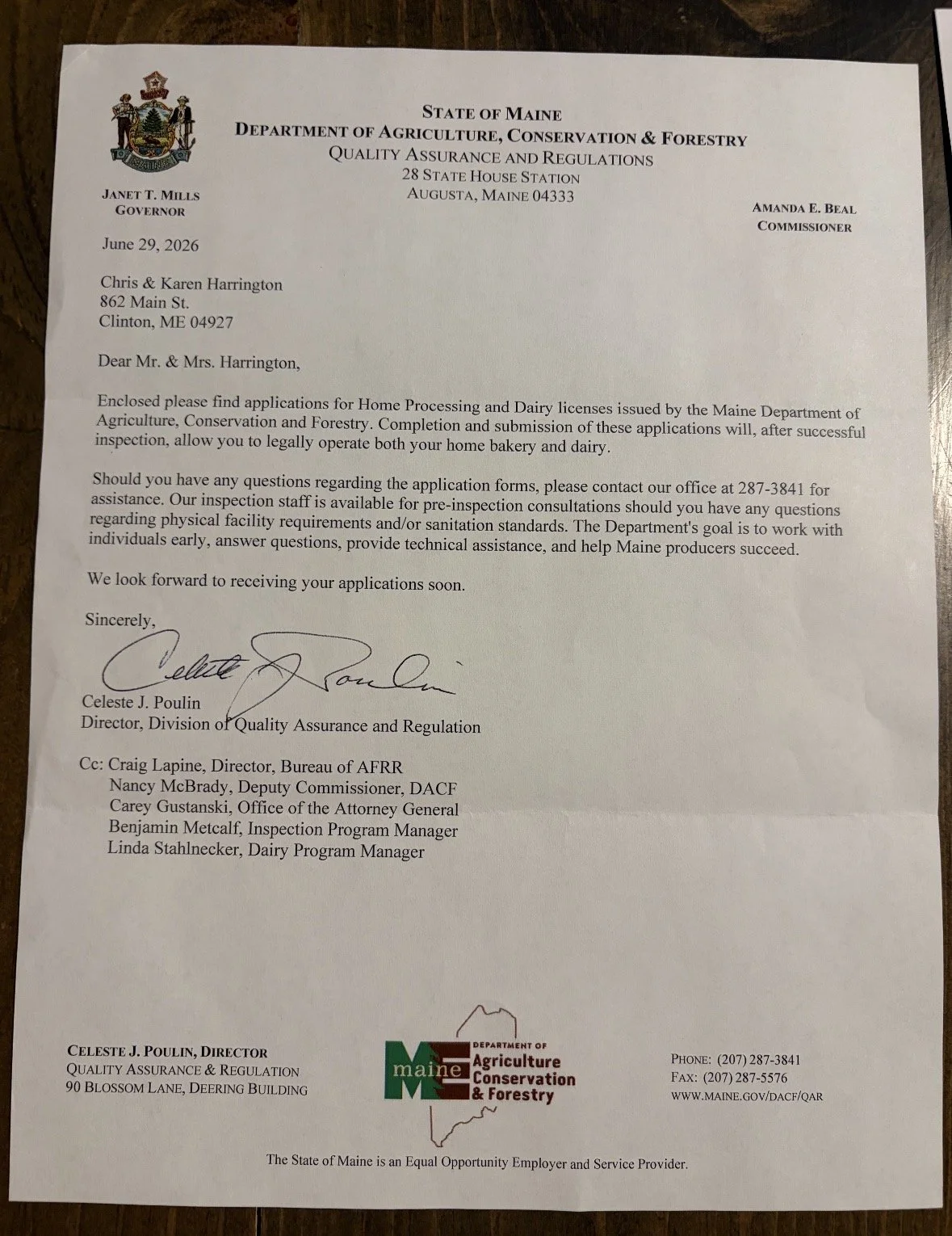
"Enclosed, please find applications for home processing and dairy licenses issued by the Maine Department of Agriculture, Conservation, and Forestry. Completion and submission of these applications will, after successful inspection, allow you to legally operate both your home bakery and dairy” - Letter from the Maine Department of Agriculture
Chris and Karen Harrington are busy people. Chris is a pastor, Karen a nurse working 50+ hours per week. They have four children, and more than 130 animals on their rural homestead. They have chickens, goats, ducks, quail, and every year, they raise a pig to help fill their freezer for the winter. When they spoke with Respect America, they were also preparing to move Chris’s aging parents onto the property to ensure they could provide needed care.
Busy? Yes, they say, but intentionally so.
“We actually moved out here to Clinton, Maine, where there's more cows than people because we wanted to get away from government overreach.” Chris shared in an interview, “We moved out here trying to be homesteaders, peaceful, enjoy, do our part in this world.”
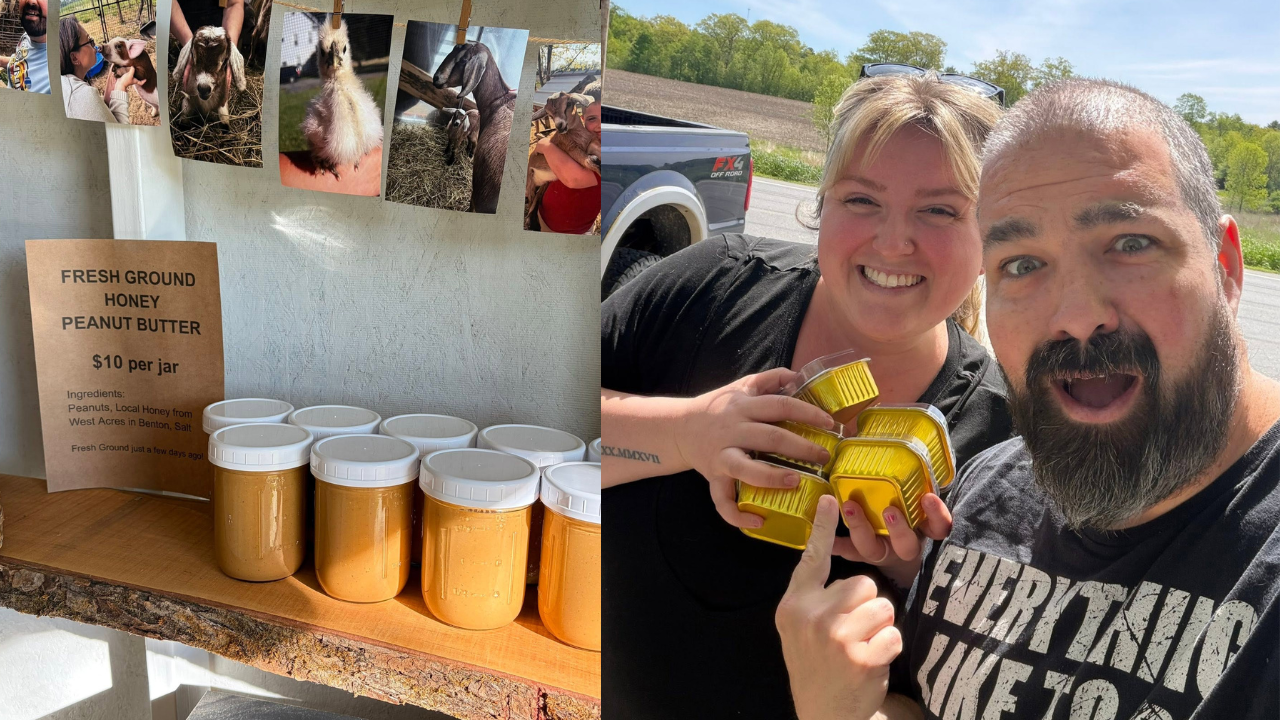
Their homestead has flourished, and they have been producing more than enough for their family. So, they share the bounty. For the past three years they have sold and given away produce, eggs, sourdough bread, goats milk, and an assortment of other baked goods. Their farmstand was a project of abundance, and they see it as a way to give back.
“This is actually just a hobby for her.” Chris laughs, “When you plant a big garden, you end up with a lot of produce.” Karen continues, “Sometimes I can a bunch and freeze a bunch. I would just put it outside on a table by our driveway for free, you know, like hundreds of pounds of zucchinis or whatever for free.”
After seeing the demand, they made their first foray into a real farmstand. “very cheap, like super reasonable prices, like a container of cherry tomatoes for a dollar. And that's when I started selling the sourdough bread, too.” Karen says, “The goal was not necessarily to start a business. We have this extra and we can share it with the community at a very reasonable price. And at the same time, whatever we get from the farm stand for revenue, if you could even call it that, would go back into the feed.”
With so many animals, and a commitment to all organic, the Harrington’s said they spend more than $700 per month keeping everyone fed.
“If you calculated all of our expenses with feed, shavings, hay, all the supplies for our animal care, like, it's the worst business plan ever. We're at a net loss. The whole idea with the farm stand was: We have extra, we can share it with our community and offset our expenses a little bit.”
For three years, the Harringtons built a reputation for good food, low prices, and giving back.
Karen shakes her head: “Nobody in town, including us, realized that we weren't supposed to be selling certain things.”
“It doesn't make sense”
On June 23, a Mr. Ben Metcalf pulled up to the Harrington’s homestead. His business card read “Inspection Program Manager” with the Maine Department of Agriculture.
“He showed up and puts on his badge and comes to the door and gives me his card and says, ‘We're shutting you down.’” Chris explains, “They could have had a phone call, an email, anything like that, but they show up and maybe strong arm a little bit. I could see it if they're hunting down a criminal, but not two people that put out goat milk and sourdough on Saturday mornings in public. It was kind of pathetic.”
“You have to be licensed” Metcalf can be seen telling Chris in a video of their interaction. “you’re no different than a restaurant, basically, the way the statute pretty much reads.”
There was, Metcalf explained, a way out from his department's oversight, however. Under Maine state law, towns can pass a Food Sovereignty law. Food sovereignty isn’t the default, though, so despite surrounding towns having passed it, and no harm coming from any of the Harrington’s activities, Metcalf ordered them to close up shop.
“I think what caught the attention of the state was when Chris built me a walk-in farm stand this spring.” Karen shared, “When he did that, I made a separate Facebook page, Harrington Homestead and Farmstand. And it was a public page that got pretty popular pretty fast.”
The Harringtons had been in violation of the law for years, apparently, but there had never been any harm, so no one had called foul. “Everybody knew we had a farm stand. Everyone at the town hall, the code enforcement officer, the police chief.” Karen chuckles, “The code enforcement officer even told the Maine state guy to get some sourdough while he was here.”
Local customers had had no problems, but now an official from Augusta was standing in the Harrington's yard, and they were told to shut down until they paid for a license and followed guidelines that would have lessened the quality of their baked products.
Backing down isn’t in the Harringtons nature, however, so they got creative.
Despite being banned from making sales, there was no prohibition on giving away the exact same products, to the exact same people. “So, we've been putting our food out for free, not keeping any of the sales in return. It's all going to charity.” Chris explained.
Over the next few weeks, hundreds of donated dollars went to local sports and recreation, domestic violence victims, and the family of a local man who had been killed in a car crash. The Harrington’s are doing what they can to benefit their community, making the best of a bad situation, but they laugh at the absurdity of Maine’s regulatory regime.
“The state is totally fine with people eating our product, our food,” Karen says, “just not purchasing it from us. So, I don't know what the health concern is. It doesn't make sense.”
“Fight back in the right way”
“We didn't ask to be in the spotlight, but we're definitely in the spotlight with this.” Chris says, “We're not just fighting for ourselves, but for the whole community, everyone that has farm stands around.”
Clinton is home to dozens of farm stands, and Chris says Metcalf could have stopped in at any of them. “Which is ridiculous. We were both happy they showed up to ours instead of Ma and Pa down the road that would have just shut theirs down and not done anything. We're going to fight this.”
The Harrington’s were uniquely positioned to bring the issue to the public and drive the change they wanted to see. Their farmstand Facebook boasts nearly five thousand followers in a town of just 3,300. Chris is also a big personality with years of preaching experience. He and Karen turned on the camera, and started a movement.
In the month that followed, they explained their situation in a “Farmstand Shutdown” video series, racking up more than 150,000 views on one of the videos. From there, they were able to collect the signatures they needed to compel local officials to take action through an emergency temporary approval.
“The town chair said, ‘Well, I'm not sure if this constitutes as an emergency.’” Karen recalls of one of the public meetings following Metcalf’s visit, “and then one of the community members said, ‘Well, if you tasted her sourdough, you would know it was for the health of the public.’”
With the support of their friends and neighbors, the Harrington’s brought the issue to the Clinton Board of Selectmen for a vote on July 28th.
“We got approval for a temporary ordinance!” Karen says in a video the couple posted to Facebook late that night. “That means for 60 days we can sell everything as we were!” Chris chimes in.
The Harrington’s now have temporary permission in place, and a favorable outlook for a permanent Food Sovereignty ordinance to be passed in November. Still, they recognize the inherent wrong in the hoops they have had to jump through. Food Sovereignty laws shouldn’t exist because they wrongly interfere with free exchange between consenting people. If the permission slip can be given, there is a risk of it being taken away. “I think a big thing with this is realizing government overreach is a thing,” Chris says “and it's been a thing for a while.”