A sandwich and a prayer: Ten years and $500k in fines later, Father Bob’s still feeding people
By: Conner Drigotas
Peanut butter and jelly
Father Bob Caudill never planned to start a soup kitchen. He didn't plan much of what came next, either.
"I would like to say I had a brilliant idea, but it wasn't that at all," he told Respect America in an interview. "It was a matter of God's hand."
In 1989 Father Bob relocated to Fort Lauderdale from Miami because he wanted something quieter. He imagined taking a teaching post, doing some counseling work, and filling in at the occasional Mass when a parish couldn't find a priest. He rented a small multi-purpose room on Power Line Road, which he described as “a rough stretch of the city,” for $300 a month. He set up a little altar with a few chairs and called it All Saints Catholic Mission.
It was in the evening of one of his first nights there that a homeless man knocked on the glass front of the building. He was hungry.
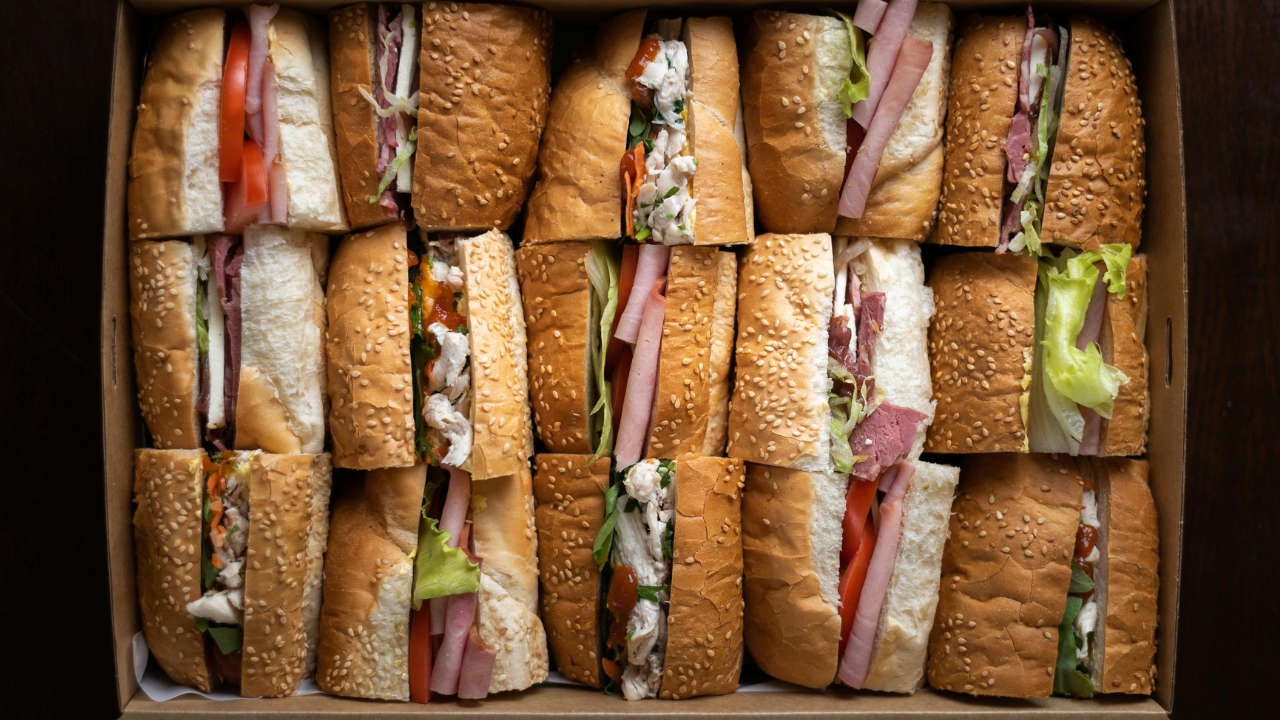
Father Bob, who says he "never learned how to cook in my life" made him a peanut butter and jelly sandwich, opened a bag of chips, and offered the stranger a Coca-Cola. “I invited him in.” Father Bob recalls, “he sat in our chairs there with me and he ate his sandwich. I thought, well, this is great. I'm already in the community, I'm making friends.”
The next night, the man came back - and brought someone with him.
As Father Bob saw the need for reliable food with increasing clarity over the next few weeks, he asked the handful of friends helping him run All Saints if they could bring food to keep in the refrigerator. That refrigerator became a soup kitchen and, over the next few decades, All Saint’s grew into a breakfast and lunch program feeding around 150 people a day, three transitional houses, and a church building that has offered a safe place to sleep during hurricanes and cold snaps. Twenty-seven people now live on the properties. All of them, he says, "were living on the street before."
By 2014, All Saints was delivering sustenance and hope that would soon come under fire. City officials were making changes to zoning law as part of a revitalization effort, and began a campaign that has led to an uproar.
A “perfect spot”
The 2014 revitalization effort centered around Power Line Road, which Father Bob described as “a major vein in Broward County.” He also called it a “perfect spot” for his mission. “I know why God chose it for us because it's where the homeless can make it through that area.”
Being a “major vein” also meant it received extra scrutiny in the name of progress.
First, he was visited by a code enforcement official who informed him redevelopment would require him to close his operation. City officials then followed up in writing to provide the details of the new zoning policy, further reinforcing the idea that he had no choice but to comply. “They told me fallaciously that ‘you have to stop feeding, you’re not feeding in the new zoning.’”
Just a few weeks later, the city delivered a cease-and-desist order, warning of daily fines and arrest.
"I said, 'Well, you might as well [arrest me],'" Father Bob recalls telling two officers who showed up. "'Take me now, because I'm not going to stop.’ They just looked at me, shocked."
Father Bob wasn’t arrested and, instead of closing, he has been fighting a battle in the courts ever since. He has gone through multiple attorneys, some of whom he says took advantage of his situation, filed paperwork at the wrong courthouse, and charged him more than $16,000 before he could get out of the contract. He also sang the praises of one attorney, a Mr. Richard Rosenbaum who worked the case through the courts until his untimely death following a lengthy battle with cancer.
Father Bob and All Saints are now represented by Peter Maverick, a business attorney who called “out of the blue” and offered to take the case pro bono to see things set right.
“I can't pay you,” Father Bob recalls telling Maverick when they first spoke. “No,” Maverick allegedly replied, “You couldn’t afford me.”
Maverick has taken the case to trial once already, in January 2026. It was thrown out on a technicality: Father Bob hadn't exhausted every administrative appeal available to him, paperwork he says he never knew existed. "The priest is not a lawyer and would not know," his attorney told the judge, but it didn't matter.
They are currently working to refile the case, and Father Bob is optimistic. After the January case was thrown out, he says multiple members of the jury approached him in the parking lot and told him he should have won. “All they heard was government trying to close down a feeding program,” he says. “They couldn't care less about the zoning.”
Picking Sides
Father Bob was once a police chaplain in the same city whose officials now want him gone. He hosted the mayor for dinner. He led prayers at city functions. He refused, on principle, every grant the government has ever offered him. "I always think it's better if you give from your heart," he says. "I don't want to force taxation for grants."
That refusal, he suspects, mattered more than anyone admitted. Broward County leans heavily Democrat, and as Father Bob's list of supporters and appearances came to include Roger Stone, General Flynn, and eventually President Trump himself, the friendliness cooled. Four of five city commissioners wanted the program closed; the one Republican who defended him eventually left office. Father Bob says a city manager once pulled him aside and told him flatly, "I'm going to close you down."
This is what happens when systems meant to address social problems devolve into warring parties where there must be losers – this conflict machine takes a human toll. Instead of helping people, politicians and partisans take extraordinary steps to punish those on the opposite side of their imaginary line.
Government officials might advance their plans and punish people in the name of progress, but like Respect America has written about in both Texas and Arizona, the result is moving community problems to someone else’s plate while hurting those trying to help.
The fight with city officials over the last twelve years has left its mark on Father Bob. His weight has fluctuated significantly with the stress of each legal round, and there is the constant workload of ensuring the doors of All Saints can stay open to help those in need.
Asked why he keeps fighting, Father Bob doesn't hesitate with an answer: "I was always taught growing up that Americans, our people, are never afraid of the government," he says. "They should be afraid of us. We make them who they are. They don't make us."
For Father Bob, the soup kitchen, even at the height of dispute, was never really about zoning variances or cease-and-desist letters. Those are distractions. His mission has always been about Human Respect. He knows that voluntary care between neighbors, a room offered during a freeze, someone to sit and pray with, or a sandwich handed through a window, builds something government coercion never could.
"It's hard to be mad at people when you eat with them," Father Bob says as he talks about All Saints’ plan to serve the community here and now. He has seen mayors and commissioners come and go, but the line for breakfast is still long down the parking lot every morning. Doors open at 9AM, and there is work to be done.