Raw Deal in the Dairy State
By: Conner Drigotas
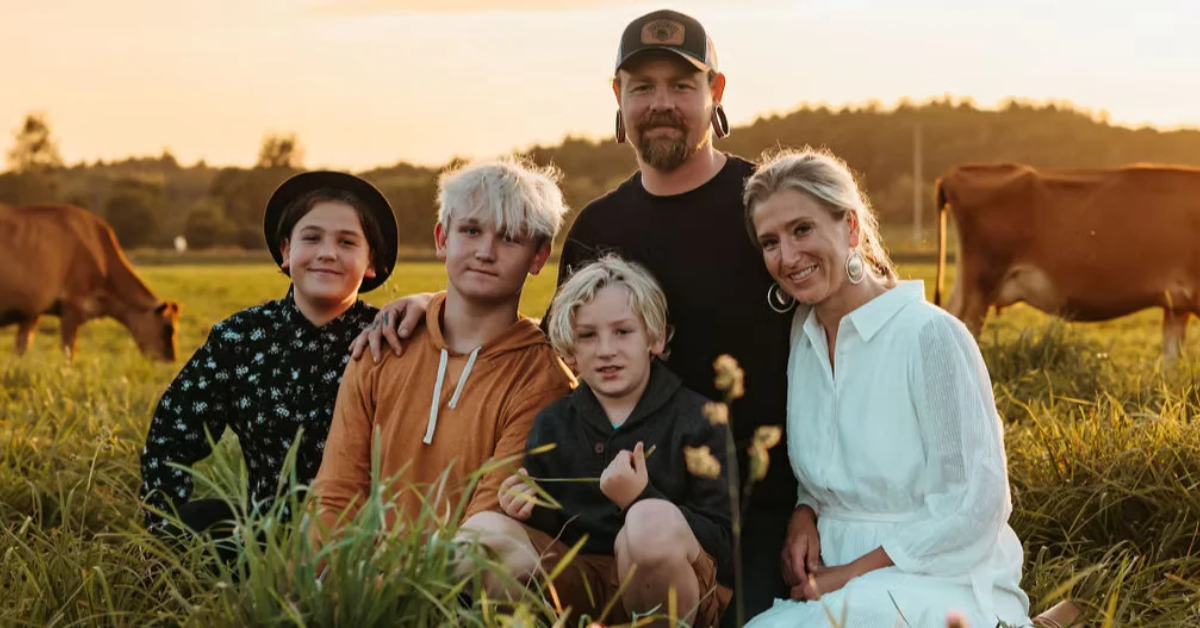
Chaz Self didn't set foot on a farm until he was 19 years old, but now the land and the animals he raises are part of who he is.
Born in Santa Cruz, California, he spent his late teens as a committed vegan and champion of animal rights. He was, however, disconnected from his food. “Milk came from a grocery store,” Chaz says, “so I had no clue what was going on.”
That changed when he came across a video of a dairy farmer beating a calf that wouldn’t take its bottle. He wanted to know how a farmer could reach that point. He wanted to do something different. He saw an opportunity to do better. So, two weeks later he enrolled in an agriculture program at Madison Wisconsin’s Mid-State Technical College.
“They hooked me up with a job milking 350 cows.” He laughs, “I went full-time into school that winter and dug into everything I didn’t want to learn.”
The education wasn’t Chaz’s passion, “I didn’t want to go to college!” but he was intoxicated by the people, the animals, and the variety of opportunities that put him in beautiful places. That first summer, he found work on a 27,000-acre grass-based farm in Norway that was a “dream.”
Back in Wisconsin, expecting their first son, he and his wife lived in a yurt, then campers, while he worked a 9-to-5 and dreamed of getting into real production farming. His opportunity came not long after when he saw an ad posted by farmers looking to retire. In 2015, he quit his job, rented the land, took over the operation, and got to work full time. The sellers had also been “big advocates for raw milk in their day,” and their introduction would set Chaz on a path to ongoing conflict with the Wisconsin state officials who are trying to put him out of business.
Chaz and his growing family lost that first farm after a year when their offer to buy was tripled by a factory farm down the road. “They came back not even 30 minutes after our offer. It was nothing personal," he says, "it was just business."
He owned 60 cows though, a flock of chickens, and the farm equipment, so they had to move quickly. “Luckily that same year, we hooked up with the Living Lands Foundation” Chaz recalled.
Starting on Thanksgiving Day in 2017, he moved his entire operation to a 390-acre grass-based dairy farm in East Troy. It had been sitting vacant for seven years, but now it’s their “forever home.”
“The battle’s here.” Chaz says. And he’s digging in.
Raids and Regulations
In 2018, Chaz and his family farm were featured in a Netflix Docuseries called Rotten. Episode 5 was called Milk Money, and dealt with “a surge in lucrative but controversial raw milk sales.”
“That documentary came out on Friday, and I got raided on Monday.”
Inspectors from the Wisconsin Department of Agriculture, Trade and Consumer Protection (DATCP) arrived with an affidavit promising he would not distribute raw milk. He refused to sign. According to Chaz, DATCP officials then pressured his milk buyer, Westby Cooperative, who dropped him. He spent two years unlicensed, also called “rogue,” then a year earning certification from the Raw Milk Institute (RAWMI), becoming the 20th farm in the nation to do so.
Through this time, he had zero complaints about product quality or negative effects. To make money as a rogue, however, he diversified what the farm offered, including a new offering Pizza on the Farm, which is exactly what it sounds like. “Really easy concept,” Chaz laughs, “We just make pizzas on a farm. It's wild!”
In 2020, the farm’s pizza offering was featured in an article, and government officials made another stop. “That article came out on a Thursday, and then I got raided on Monday.”
This time, DATCP shut down his farm pizza business over what he calls "some of the dumbest infractions you could imagine." Attorneys from the Farm-to-Consumer Legal Defense Fund, however, had him operating again within a week.
Chaz also tried to change his strategy. His product was safe, popular, and essential to his livelihood, so he tried to build a bridge with regulators. Chaz offered to run a two-year pilot project around raw milk: he would mentor four other farmers, test on-farm, and hand the state the data. DATCP official’s answer? As Chaz put it: “About an hour into the presentation, they said, ‘We absolutely don't give a shit, you just need to come into compliance with state law.’”
So, he did. After roughly a year and $25,000 out of pocket, Chaz held a Grade A license from DATCP, a retail license, a food handling license and more. This allowed his company, Grassway Organics, to distribute raw milk legally under Wisconsin’s ATCP 65.52(2)(b), the bona fide ownership interest provision.
It was a lot of money and effort that, ultimately, boiled down to paperwork – not changes to his offering.
Five quiet years of inspections followed. "I just did what DATCP told me to do," he says. "And it was fine for five years. And now it's not fine."
Sour Milk
At all points in time, Chaz has sold his products to people who freely chose to buy them. He has been forced to reallocate money that would have gone to his wife and three sons, and instead spend it on regulatory burdens. His products have never hurt anyone.
Still, in April 2026, Chaz was hit with a fine of more than $10,000, was told to stop business, and is being charged an additional $50 per day by Wisconsin DATCP officials who have suspended his license despite no changes to what Grassway Organics does, or change to Wisconsin law.
With consent intact, and no force or coercion present between Chaz and his customers, there is no reason for DATCP officials to have taken such drastic measures. But they are very real, and appear to be driven by a change of political favorability for raw milk. Punishment seems to have followed a simple name change.
The company Grassway Organics contracted with to get their Grade A license, Organic Pastures, changed the name of their business to Raw Farms, and that spurred a change in the way Chaz’s product was treated.
State documents show the formal escalation. On March 18, 2026, DATCP Secretary Randy Romanski signed an order placing conditions on Grassway's milk producer license, including a demand to stop advertising their unpasteurized milk. After an April 8 inspection, department staff concluded Grassway had not complied. On April 21, Romanski signed a Summary Special Order suspending Grassway’s license, effective 7:00 a.m. the next morning.
Chaz says the state never told him which law he had broken. He spent thousands on an attorney to restructure Grassway's paperwork and sent it all to DATCP, but received "Crickets." The demand for money came next. To settle, Grassway would have to plead no contest and waive their right to trial.
"Absolutely not," Chaz told them. "That's the whole point we're going to court. We just want due process." His attorney filed for a restraining order in Walworth County against DATCP to stop them from initiating further raids. A judge declined to grant it on an emergency basis, but set a hearing for November 30.
As he prepares for a legal battle, Chaz is waging war in the court of public opinion. His opening salvo is simple: "If we can't even sell raw dairy in the dairy state, what’s next?"
Like Pizza on the Farm, social media has become another revenue stream for his family to rely on as they navigate political headwinds and a rapidly changing landscape. It is only more recently, however, that these channels have become a tool to demand change.
"I don't want this war. You don't want this war.” he recalls thinking about DATCP officials’ continued efforts to put him out of business, “They pushed and pushed and pushed, and I'm so grateful that there's a fighting group of people that still care about farmers.”
It was only in response to government officials hitting Grassway with a temporary restraining order, demanding that he cease operations, that he started posting in earnest, and sharing videos with his audience to explain what his family was facing. They went viral, reaching millions of people and giving him tools to fight back.
The GoFundMe campaign, seeking funds to “go toward the legal battle to keep Grassway Organics running and to defend the rights of its owners” has raised more than $121,000 to date.
Chaz is ready for the future: “I'm risking everything I have to fight the state on something that I was trying to be cooperative about. It's the system that's failing, not the farmers. They're trying to provide for their community. There needs to be less government and I will stand my ground to the very end."