Officers kicked down Afroman’s door. He kicked back.
By: Conner Drigotas
The Raid
Joseph Foreman was not home when officers from the Adams County Sheriff's Office came to his house.
It was August 2022, and his wife Angie was there with their children, ages 10 and 12, when deputies from the Adams County Sheriff's Office in Ohio kicked the door off its frame. They had a warrant to search Foreman’s home for evidence of drug trafficking and kidnapping.
Rifles and handguns drawn, they went through the Foreman residence searching for evidence, flipping through a wad of cash, combing his CD collection, and rifling through his suit pockets. One deputy paused, gun still drawn, apparently distracted by a lemon pound cake sitting on the kitchen counter.
In the end, the officers found no drugs, no kidnapping victims, and no evidence of any crime. Foreman, popularly known as Afroman and best known for his 2000 hit "Because I Got High," returned to a ransacked house, traumatized children, and missing cash that officials would later say deputies had merely miscounted.
"After they run around my house with guns and kick down my door," Afroman would later say from the witness stand, "I got the right to kick a can in my backyard, use my freedom of speech, and turn my bad times into a good time."
That is exactly what he did.
Lemon Pound Cake
With video footage from his home security system and his wife’s cell phone taken during the raid, Foreman put his creative talent to work. Over the following several months, he remixed footage into a series of music videos that spread rapidly across the internet. The catchy "Lemon Pound Cake" has collected more than 8.2 million views on YouTube.
Foreman’s songs, also released as an album, were not gentle. While he mocked the officers’ failed raid and apparent hunger, he also pointed out how officers attempted to tamper with his security system, allegedly flipping him off while doing so, and asked: “Will you help me repair my door?” Then, he attributed personal, professional, and sexual transgressions to various deputies. He also sold merchandise bearing the officers' names and images. By his own admission, the attention was good for business. "All the publicity from the officers' lawsuit on me is running up my numbers," he later told the court.
Not pleased with the fallout, seven of the deputies — Shawn D. Cooley, Justin Cooley, Michael D. Estep, Shawn D. Grooms, Brian Newland, Lisa Phillips, and Randolph L. Walters, Jr. filed a civil lawsuit against Foreman in March 2023. They claimed defamation and invasion of privacy and sought nearly four million dollars in damages. They said the videos had subjected them to public humiliation, death threats, and professional harassment. Shawn Cooley, the deputy who paused at the cake and has since retired, testified that strangers have mailed him hundreds of pound cakes at work and that he had even been recognized while working cases in other jurisdictions.
"I had one guy come out of a bedroom after me, call me a thief and want to know why I stole Afroman's money," Cooley told the court. "It just went from being a nice, quiet community, a job you felt safe in, to a place where you had to look over your shoulder every second."
Mockery, however, is a legitimate form of justice in the court of public opinion – and the officers doubling down with legal action were about to learn a vital lesson about how unfavorable police violence and coercion can be to the American public.
America Won
The trial opened on March 16, 2026, in West Union, Ohio, and lasted just two and a half days.
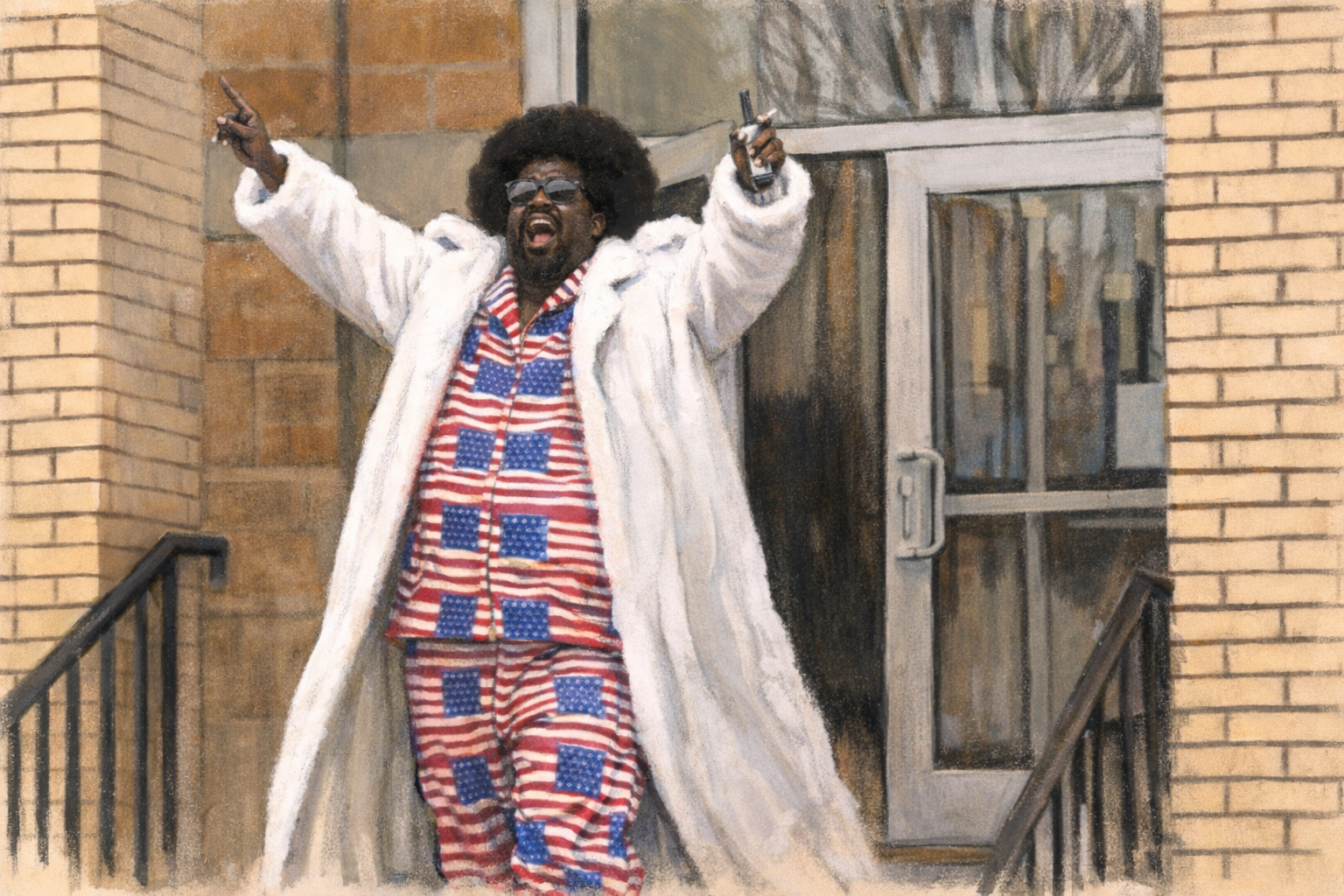
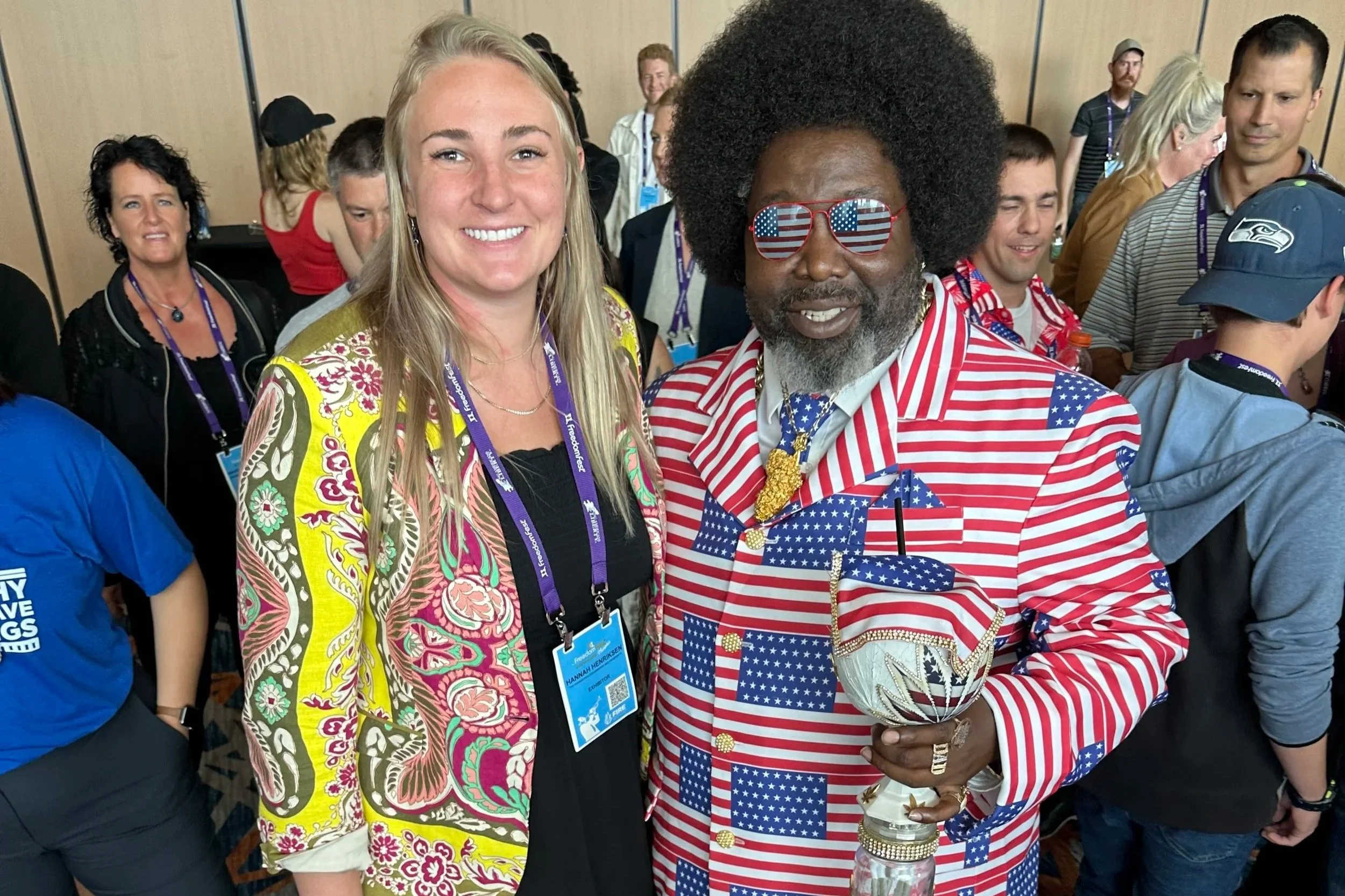
Foreman, dressed in an American flag suit and sunglasses, along with his attorney and a variety of amicus supporters, argued that the case at hand was an attempt to silence a citizen's criticism of public officials, an increasingly well-trodden area of law. This certain type of lawsuit, known as a strategic lawsuit against public participation (SLAPP), is designed to target protected First Amendment speech and other activities in an attempt to silence the speaker or punish them for carrying out a basic or essential service that may be related to their job. 40 states and Washington DC currently have anti-SLAPP laws on their books.
Foreman’s actions represent the heart of free speech and peaceful protest: without the ability to speak up and spread a message through the creative medium of your choice, the scales become tipped in favor of those who initiate violence or diminish wealth by force or fraud, especially if they are wearing a badge.
Foreman was outspoken about the issue of theft in testimony, saying that “Police officers shouldn’t be stealing civilians’ money,” but he also pointed out that he was present only to defend himself, rather than instigating despite being wronged, “I use my talent to pay for the damages you brought.” he said, “I didn't go down here and sue the police department.”
Unlike others who have had the safety of their homes breached by law enforcement, Foreman had the opportunity to defend himself – and he used that stage to bring his message to the masses.
Foreman’s Ohio courtroom became a spectacle that reached across the country, ushering in a Streisand Effect and backfiring spectacularly on the officers seeking to extract millions from his family. The deputies who filed the suit gave Afroman an audience he never could have bought. America looked on as officers watched the music videos in court, shed tears over how the songs had upset them, and stumbled over testimony regarding the harms they alleged.
Getting a verdict didn’t take long. After six hours of deliberation, the jury found in favor of Foreman on every count. Judge Jonathan Hein read the outcome aloud: "In all circumstances, the jury finds in favor of the defendant."
“I didn’t win, America won.” Foreman told a reporter outside the courthouse following the verdict, “America still has freedom of speech. It’s still for the people by the people.”
Still, the use of the force is always going to have negative results for each of those involved: since the trial, there have been calls for additional scrutiny of the officers involved, the child of one of the officers claims to have been hazed at school as a result of his father’s lawsuit, and Foreman was ordered by the Judge to pay half of the court costs.
Though the officer’s attorney says they will “review the verdict and consider any appropriate next steps,” Foreman has a win in his star spangled pocket. He has repeatedly pointed back to the initiation of force that led to their public embarrassment: “If they hadn’t wrongly raided my house, there would be no lawsuit, I would not know their names, they wouldn’t be on my home surveillance system, and there would be no songs.”