Freeing Ross Ulbricht Saved Taxpayers $2 Million — His Mother Says That's Just the Beginning
By: Conner Drigotas
“Under siege”
On October 2, 2013, Lyn Ulbricht entered her husband’s home office and found him, “sitting there with his head in his hands.” In front of him was the glowing screen of their home computer showing headlines that would change the course of their life.
Their son, Ross, had been arrested by federal agents on charges which, though they didn’t know it at the time, would soon see him handed two life sentences plus 40 years, in federal prison.
Though much ink has been, and continues to be, spilled about the right or wrong of what led to Ross’ arrest, what is indisputable is the heroically sustained effort put forth by his mother over more than a decade to see her son set free.
“My whole life changed that day.” Lyn told Respect America in an interview, “[It was] so out of the blue, weird. I turn on the TV and George Stephanopoulos was going: ‘They found the culprit. He's guilty.’ And I'm like, don't we have trials? Aren't we innocent until proven guilty? Am I missing something here?”
Lyn and her husband’s lives were quickly turned upside down as they were inundated with hundreds of emails, observed constantly by “trucks with big cameras, taking pictures of our house, [and reporters] knocking on our doors,” all while trying to learn for themselves why their son had been arrested, sort fact from fiction, and come to terms with their new reality. “It's kind of like when you wake up and you forget what happened at first. I would wake up and then; ‘Oh, Ross has been arrested. What's going on?’”
Lyn’s first foray into advocacy, soon after the arrest, was an attempt to clear the air, and help organize the frenzy of information. “I got a hold of a friend of his from high school, and I said, ‘I want to put up a page or something saying who Ross is and who Ross isn't,’ just simple. And he put it up for me.” Lyn shared, “I thought, I have got to speak out for him. There's no one speaking out for him. And that's how it all started.”
“It's just one person signing a piece of paper”
In that first year after the arrest, Lyn set up that brief webpage with help from Ross’s high school friend, worried about her son, and watched the beginning of the long legal process as it began to play out. Most importantly, Lyn says, she prayed; and through that practice, received a clear message:
“I didn't hear it in my ears. It wasn't a thought, but it was, ‘He will be free.’ And I get chills just thinking about it now. And I really believe that God was talking to me,” she says, “I got different signals along the way, but I prayed a lot, a lot of people did, but I let that lead me.”
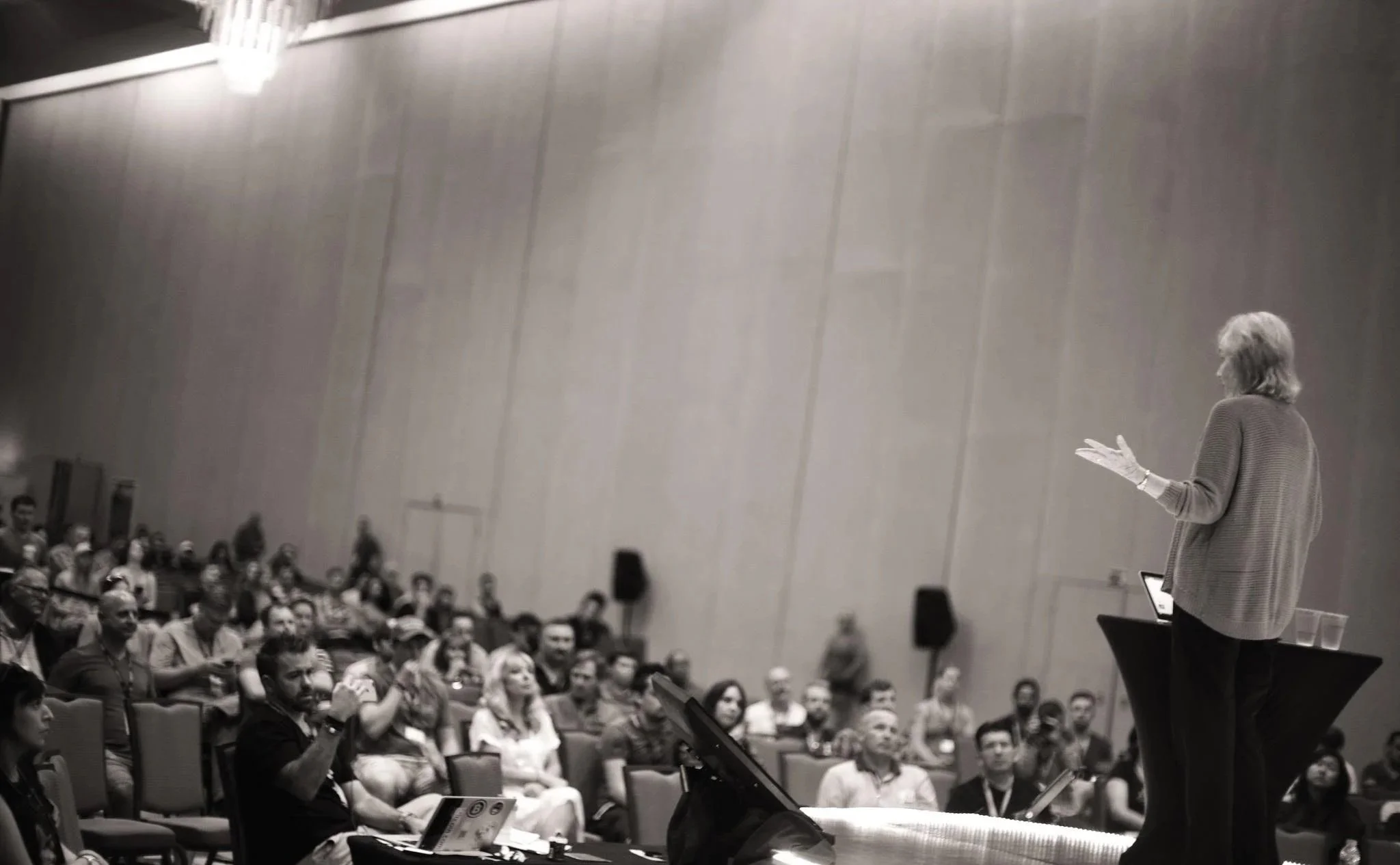
Initially unsure what to do with that message, Lyn says she was set on the path she would pursue for the next decade when she was invited to step outside her comfort zone and speak to a crowd of hundreds about Ross and her own ordeal as a mother.
“[They said] ‘we think we want her to speak for the biggest night, Saturday night.’ I said, ‘Well, okay, God, if this is what you want, I'll do it’…. And so, once that happened, one thing led to another. That [first] event was PorcFest, the Porcupine Freedom Festival, and they really gave me my voice.”
Lyn’s mainstage New Hampshire speech in the summer of 2014 was the jumping off point for what would become hundreds of speaking engagements, media appearances, and relationship building opportunities that would bring together hundreds of thousands of people in support of freeing her son. Still optimistic in those early days that the courts would provide an escape from prison, Lyn had no way of knowing how vital her growing coalition would become.
As courts upheld Ross’s multiple life sentence, first in May 2017 at the Second Circuit, and then in June 2018 when the Supreme Court denied his petition, the prospects of relief through the courts faded to nothing and the only path remaining was a Presidential Pardon – a challenge Lyn was surprisingly ready to meet head on.
“I thought, well, how hard is this? It's just one person signing a piece of paper. That's what it is. That's what I need. I need that signature on a piece of paper by the President.” Lyn said with a smile, “You know, it's just the President, but it's a person. It's not like I'm trying to lift up an actual mountain and move it over here. It's doable.”
By the time of the 2017 Supreme Court rejection, Lyn had built a national following and was far from a lone voice. A petition to Free Ross would come to earn more than 600,000 signatures, and Lyn was becoming a beloved and familiar face to many. She was the involved and passionate mother of an imprisoned folk hero, and there was hardly a major media outlet in America that had not run a story of one kind or another about Ross. The voices clamoring for his freedom were only getting louder.
“I do think ideas really matter, and I'm very much for freedom and for people to live their lives unencumbered by a huge government who's controlling them” Lyn said, “the time when I would say I had the most hope and thought it really was going to happen, or could happen, was when President Trump got up on the stage of Libertarian Convention [in May 2024] and pledged that he would commute Ross's sentence to time served if he were elected… I really believed he would keep his word, and a lot of people did not believe he would.”
Between that moment, and the eventual election of President Trump to a second term six months later, Lyn recommitted to the playbook that she had been running since she began the campaign to free her son in 2014: “Just keep your eye on the prize… I just knew that I'd never give up. I couldn't live with myself with him in there, and I knew that. I wasn't somebody, in the past, who was that good about finishing things. I'm really good at starting things, but I haven't been one to really take it to the end. But this, this was something I just couldn't give up.”
In January 2025, Lyn and her family flew to Tucson, Arizona, believing there would be real hope for a commutation immediately following Trump’s second inauguration. They wanted to “meet him and see him come out” if it came to pass. On the morning of January 21st, they visited Ross in prison, and could feel supportive anticipation from the families and inmates who knew the Ulbricht’s were possibly on the verge of being reunited.
“It was so touching, because when we all left early from visiting and all the people that were in there, the inmates and their family, were like, ‘Bye, good luck! We're so happy for you.’” Lyn shared, “I think of that a lot because I just feel so bad that they're in there still.”
That evening, Lyn picked up her cellphone to find a missed call from the White House and was asked when she called back if she would like to take a call from the President. She said yes.
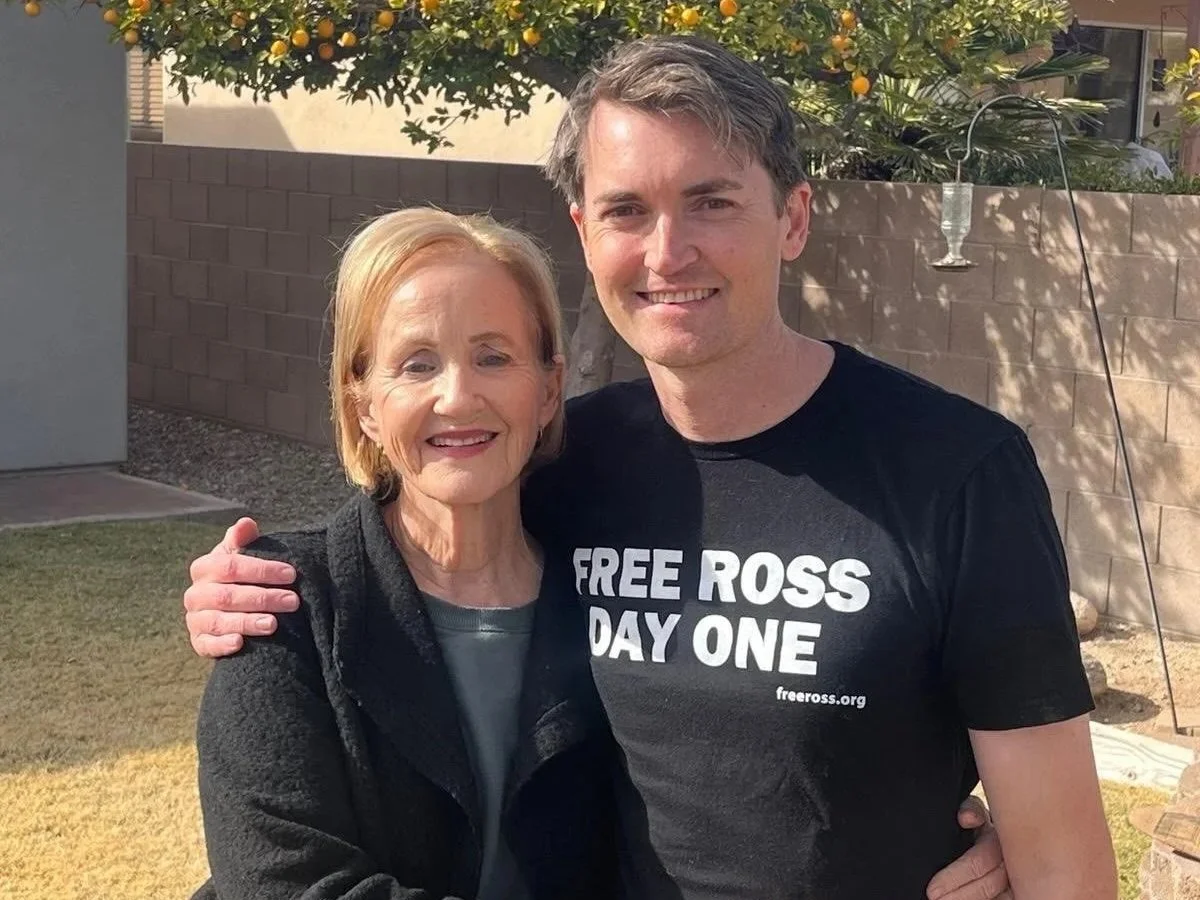
“He read me the pardon on the phone. He was so sweet and gracious.” Lyn recalled, “And of course, I'm blubbering a thank you, because I wasn't expecting a full pardon…I feel like he's got a heart. I feel like he cared about me and my son and our family…. I know a lot of people don't feel this way, but my experience of him is as a person who cares… it's pretty much a miracle that it got to the point where the President of the United States was giving him a pardon, unbelievable. But it took a long time. It was over 11, almost 12 years.”
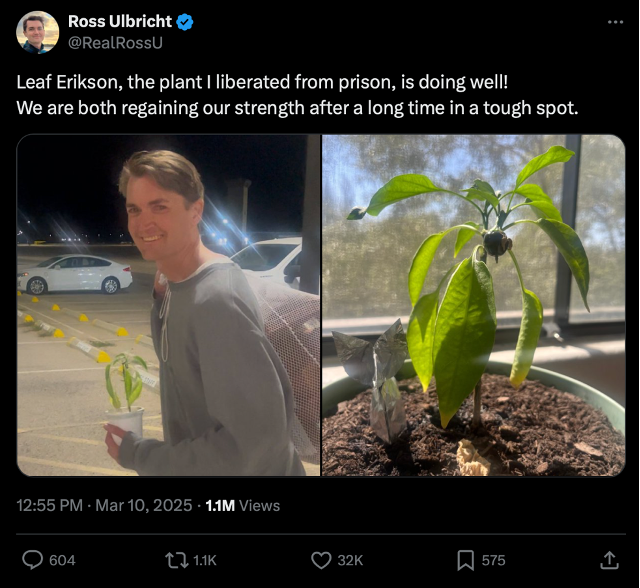
Around eight that evening, with only their family and a few reporters present in the parking lot, Lyn welcomed her son to his newfound freedom. “He just walked out the door, you know? And it was just surreal, to be honest. It was just amazing. And he's carrying his plant.”
Mothers Against Cruel Sentencing
With her son now post-release, Lyn is planting seeds of her own, and tending them carefully as she decides in which direction to grow. Foremost in her mind after more than a decade of struggle are the many families she met who are splintered because some of their members are behind bars.
“I, along the way, met so many people who are in horrible situations with their own kids and loved ones, and that's why now I want to speak out about that more,” Lyn said, “What I'm doing now is not specifically for Ross, but it's something Ross cares about. It's the over sentencing in the country that he was part of, that he suffered from, as well as so many others.”
Those “many others” are 194,803 Americans, one in six people in prison, who are serving life sentences. “It's a crazy stat, we're 4% of the world's population, but hold an estimated 40% of the world's life sentences population,” Lyn shared, “83% of the people in the world who are serving life without parole are here. I can maybe help the situation by talking about the over sentencing in this country, it's too much.”
To address the problem, Lyn has started a new project called Mothers Against Cruel Sentencing (MACS) where she is seeking a “return to fair and just sentencing” that will improve outcomes for families, children, and communities – while also addressing the billions in costs borne by taxpayers.
“Life without parole is a really terrible thing. Prisons are for keeping us safe from dangerous people who are going to harm us. And I mean harm us, physically, attack us, be violent. It's very, very expensive. It would have cost at least $2 million to ‘keep us protected from Ross’ for his life.”
According to the Prison Policy Initiative, a nonprofit with a mission to “expose the broader harm of mass criminalization,” the total US government annual expense on public prisons and jails is $80.7 billion, and another $3.9 billion on private prisons and jails.
While the financial burden on nonconsenting taxpayers is staggering, Lyn says she felt called to this mission as a result of seeing the impact on families while moving around the country to be close to her incarcerated son, and sharing in their pain.
“I even ran into one mom, and we knew each other in New York. And then when we were both transferred, her husband and my son, to Colorado,” Lyn said, “She was raising good kids. They were getting good grades and all that stuff. And then when their father was put in prison, everything started falling apart. The impact [that] has on families, on the children, and the harm that it does is extreme. There's a lot of nonviolent people in prison.”
In that case, Lyn said the husband had stolen two sports jerseys, on sale for less than $100 total at the time, and received a life sentence as a result of a three-strike law, with his previous arrests coming from drug-induced nonviolent crimes. Adding $2 million to our tax bills is a bad deal, and doesn’t make society a whit more just. Around 3% of those serving life sentences are imprisoned for nonviolent crimes.
This kind of result in a court, Lyn says, runs blatantly afoul of the Eighth Amendment’s restriction on cruel and unusual punishment. “That's kind of obvious, that's pretty cruel, that's pretty harsh, and I feel like it goes against our values as a country.”
“It's hard to turn your back now and say, ‘Yeah, I'm fine. My son's out, yay,’ and I do feel that way, but not without thinking of them. [I created] Mothers Against Cruel Sentencing [because] it's the moms who often will stick by their kid in prison. MACS is not just for mothers. We welcome all people to support us… what I realize I can do, that I feel like I can bring to the table, is shining a light on this, talking about it like I am now. People don't understand this is happening. They don't think about it, and I understand that. I didn't either.”
“Eye on the prize”
Lyn is busy starting a new chapter of her own life, and is glad to see her son doing so as well. “Ross has had to heal, that's what I observe, you know. It's hard,” she says, “He was in a maximum-security prison for eleven and a half years. It's really very difficult. He's been amazing and really great, and so he's just living a simple life with his wife, and kind of moving around a bit.”
The next step, she says, is building momentum for continued positive change, no matter what obstacles get in the way.
“I'm so grateful, so grateful. It's hard to complain about anything right now, ever.” When asked about what message she wants more people to understand she said, “Look, I was not anybody. I didn't have connections… don't think too that you're too small to do things. Keep your eye on the prize, and keep going.”