
“naked strength:” Fenn Church fights to protect his trees
By: Conner Drigotas
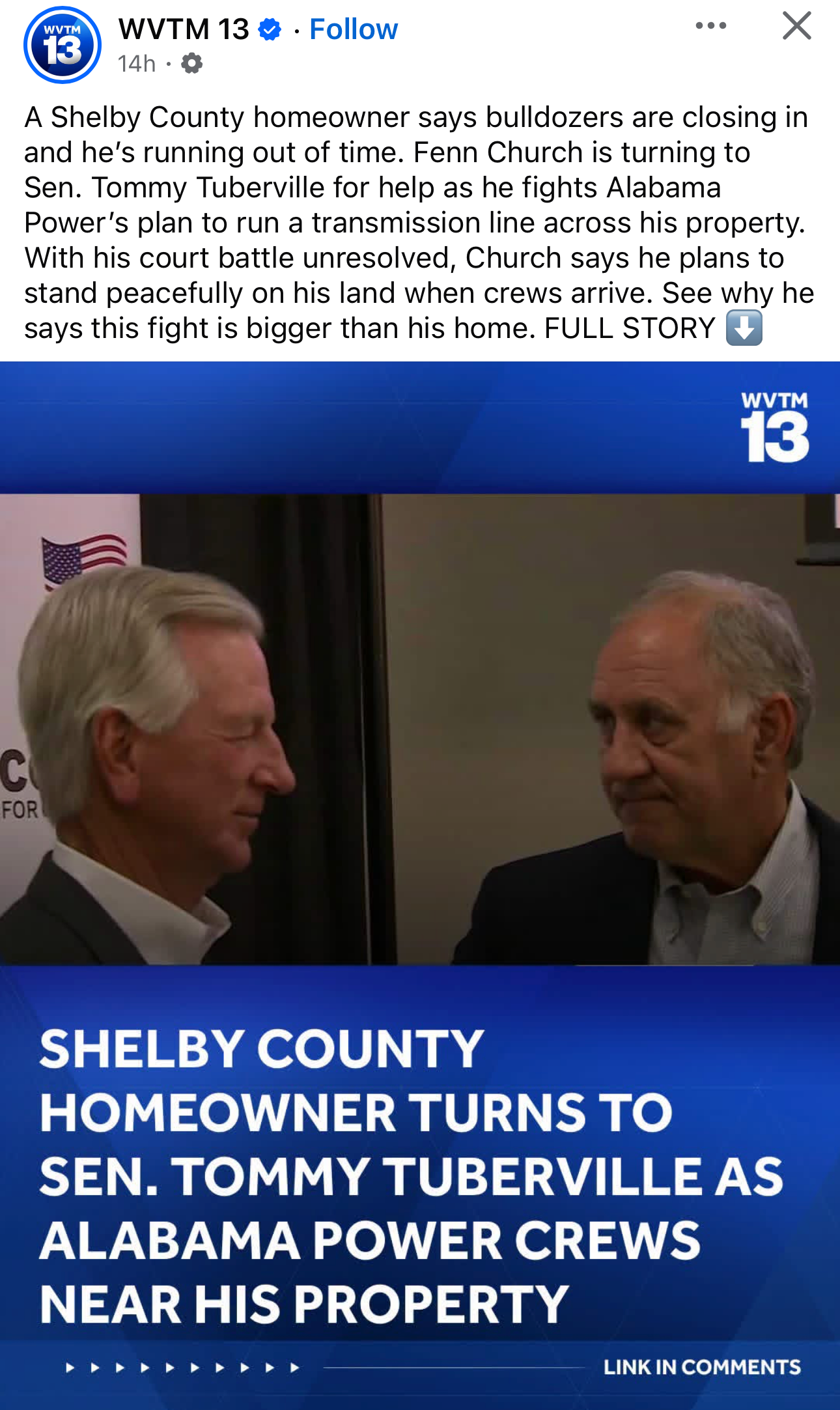
The Bends
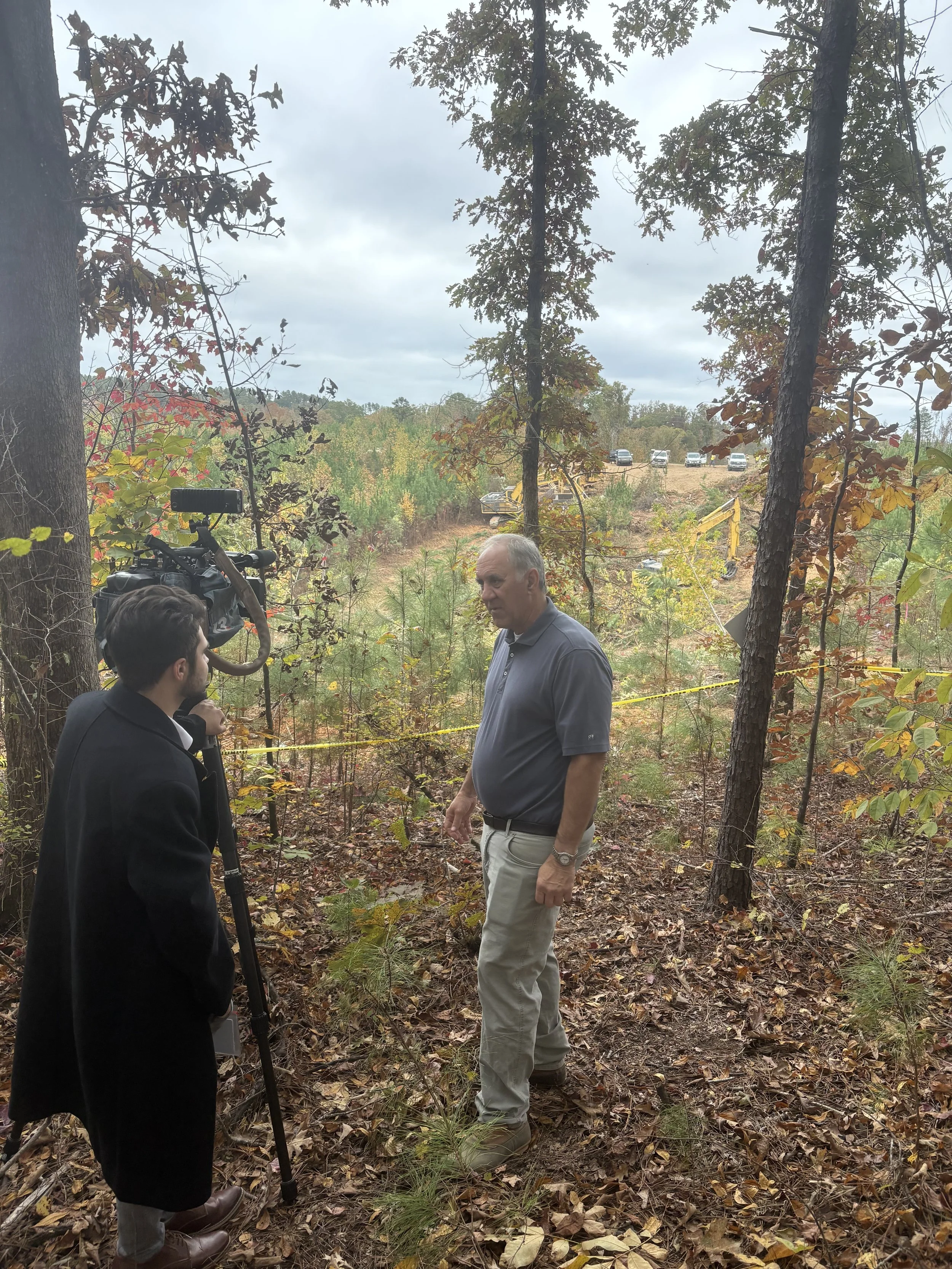
“All right, so they're building a 74-mile-long transmission line.” Fenn Church explains, “I’m trying to protect my home, and I'll do it at all costs.”
Fenn owns 416 acres in Alabama, and despite no desire to sell off his pristine woodlands, he is being forced to endure state and power company officials seizing part of his property using eminent domain following the passage of House Bill 400 in 2019. The bill, supported by both Republicans and Democrats, aimed to bring high speed internet to rural Alabama.
The new law allowed electric utility companies to use their existing infrastructure for the expansion, but Fenn says mission creep and new technology has led to the expansion that threatens his home.
“The state of Alabama's power consumption has gone down the last two years.” he says, “And they're chasing data centers now.”
The project involves big money. Despite Alabama’s HB 400 not allocating any funds toward internet expansion, it was regulatory rather than an appropriation, total public broadband investments in Alabama are up to $2.5 billion.
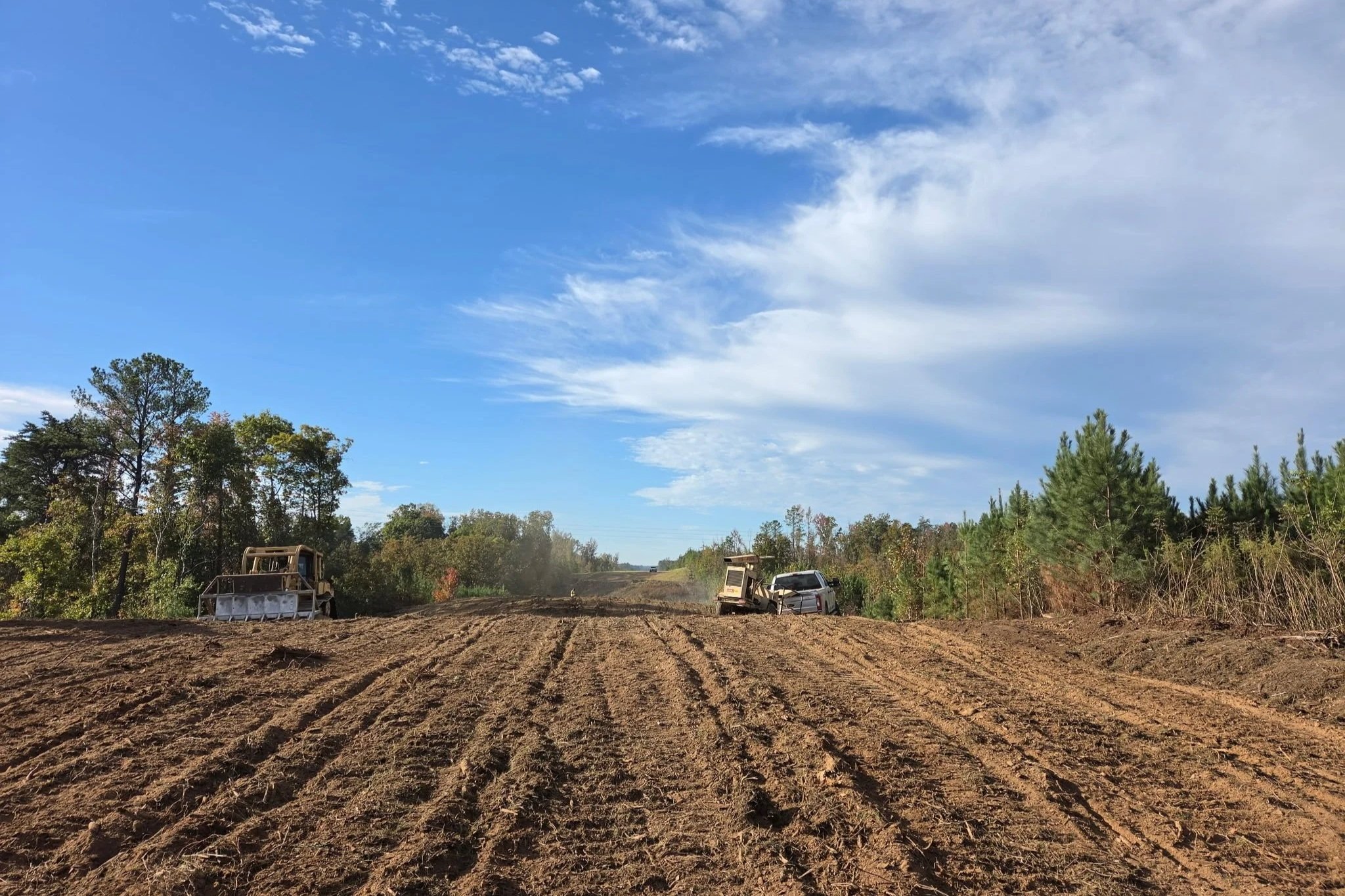
The path for new high voltage powerlines is scheduled to go right through Fenn’s property, about ten miles from a data center under construction; breaking his unified plot “up into six parcels” with permanent easements that would disrupt his use and limit future options for his family. The intrusion is particularly unsettling as there are other options that decision makers are refusing to entertain.
“They gave 60 other property owners what they call ‘bends’ to go around their property and when they got to my property, I asked for a bend.” Fenn says, “I was discriminated against because they went around 60 other properties and they wouldn't go around mine.”
As he faces down bulldozers, sometimes literally, and fights back in court to protect his land, Fenn laments how easily he has found himself in the fight of his life. “Eminent domain should be used as a last resort;” he says, “in my case, I think it was used as a first resort.”
“Monarch of the wood”
When the threat of eminent domain first came, Fenn wasn’t in it alone. His neighbor to the north, Dale, “was originally in the lawsuit with me,” Fenn recalls, “but he bowed out in September just because it got too expensive.”
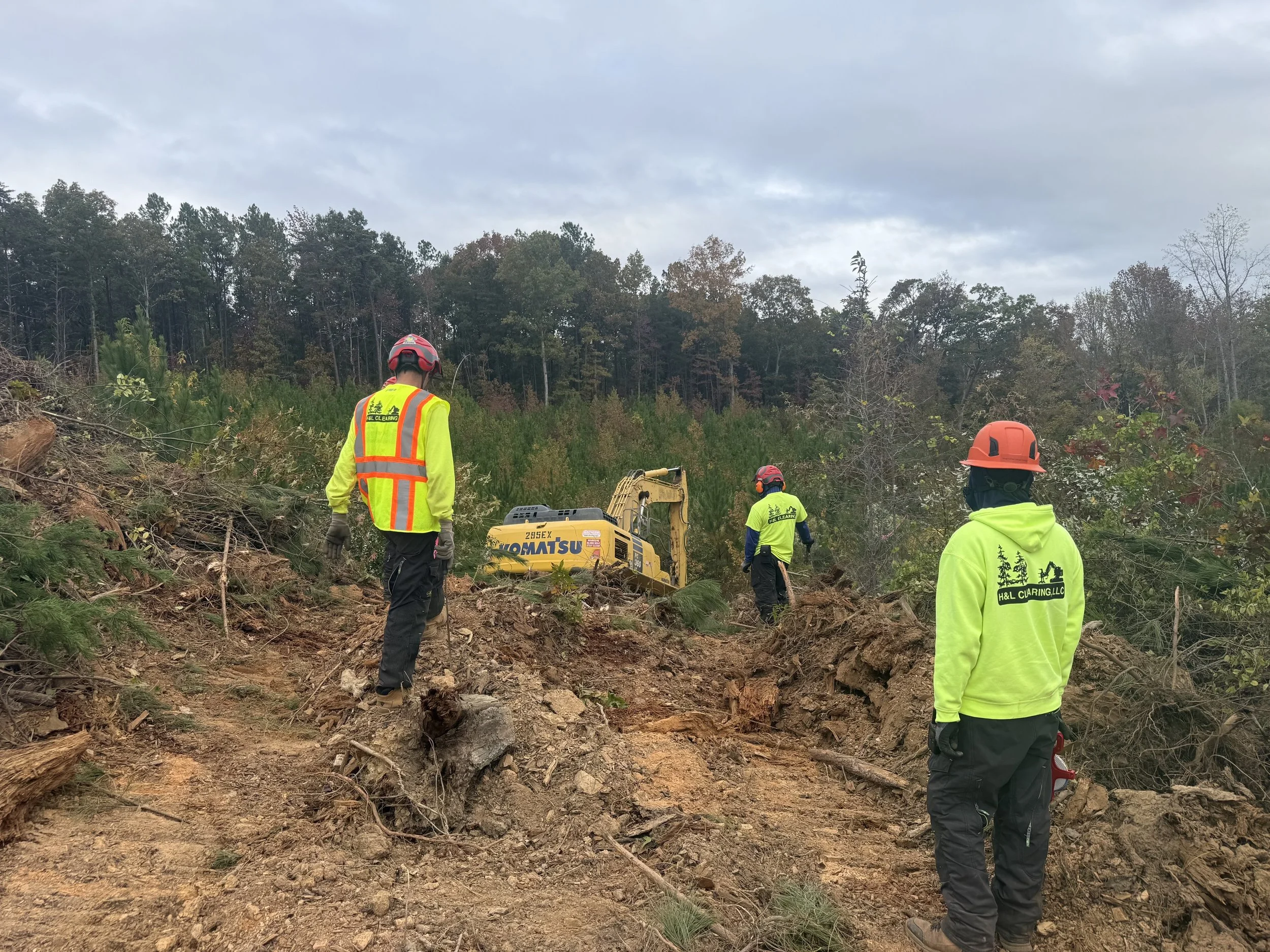
They have lost more than money. Among the issues Fenn has with his land being taken by force is the disrespect being shown to the forest he has spent years carefully stewarding. Since Dale ended his legal fight, they have both had to watch as construction crews, sent to clear his land for those power lines, tore through wildlife. Fenn says Dale “has nothing but white oaks, just like I do, going through the woods.”
White oak trees can live 400 to 600 years and grow more than a hundred feet high. Their canopies span ninety feet. They are slow to moderate in their growth speed, contributing to their dense, decay resistant qualities prized by woodworkers.
Famous poets, such as Tennyson, Malloch, and Mary Howitt, have praised the tree's "naked strength", dubbed it “gallant,” and decreed it to be the "monarch of the wood.”
“Guess what [those crews are] doing with those white oaks?” Fenn asks, somberly, “Putting them in a tub grinder. Yup, and grinding them up to mulch.” Like those poets, Fenn holds white oaks in high regard, and does not want to see them cut down, even to make a profit.
For now, Fenn has to keep a watchful eye to ensure bulldozers and chainsaws don’t bite into the forest he holds dear. He still has not been able to keep it pristine. In early November he made a trip to his office. Lingering tree crew members “flew a drone over and saw me leave, and they came in.” he says, “I was gone a total of three hours and they cut 265 yards, 65 wide, of my white oaks and pines until I kicked them off.” He is now paying people “to sit out here and watch it along with me to guard the line.”
Fenn believes his years of work to maintain the woods is one of the reasons power company and regulatory officials are insistent on taking his property instead of finding an alternative route. He has heavy equipment, and has a clean trail system that would allow them to easily traverse the land from day one.
“I think that's kind of what really drew them to my property is they know they don't have to build any roads. They want to use my front driveway and all my road systems through my property.”
Convenience is no excuse for thievery, but the letter of American law has promoted this kind of action by government officials for nearly 150 years.
“A shiny red apple”
Over the last few decades, Fenn Church has seen things change. He says he remembers a time when cell towers were going up and Verizon or T-Mobile representatives would ask farmers about putting up a tower in a “swampy area” and pay them every month for the privilege. “Not anymore.” Fenn says, “Alabama Power takes the easements and the landowner just has to face a truck and construction crew pulling up.”
Fenn says he’s changed, too, “Twenty years ago I'd be so mad I'd want to fight everybody about it. But now I'm 60 and I've got a few more miles under my belt. I've had a cool head this whole time with this thing. What they don't want is [the public] to see me arrested standing on my own property peacefully protesting them coming in and cutting my trees.”
Keeping a cool head should not be confused with having a weak spine. Fenn Church has spent “in the $150,000 range” on his legal efforts. He refuses to budge from his own property line as men in hardhats say he is “obstructing” their work, but he still finds time to reflect on the beauty of what he stands to lose.
“My 416 acres are like a shiny red apple. Alabama Power wants to take a bite, and then all the telecommunications companies want to take a bite, and then they want to leave me with the core and tell me it's worth the same amount as it was before they started biting. And it's ridiculous.”
Theft is ridiculous. Not in a way that makes you laugh, but in a way that makes you cry. When the inevitable result is the loss of happiness, harmony, and prosperity – it’s easy to see why peaceful alternatives are necessary for a brighter future.
“Eminent domain should be a negotiation process, not a ‘slam down your throat, here it is.’" Fenn says, “I've seen the next five years of what these transmission lines are going to look like across Alabama, and they're all chasing data centers. They all got to be connected, and there's going to be a lot more landowners affected by this. I'm just the first that really stood up to them.”