
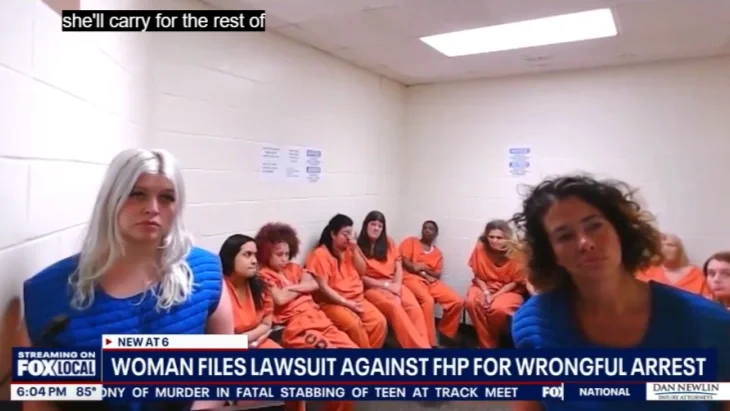
“It was just me and God in that jail cell”
By: Conner Drigotas
In October 2025, Lindsay Isaacs was in the process of rediscovering her faith. The then 23-year-old Florida resident says she had started praying, had bought and started reading new books to guide her relationship with God, and was asking big questions. She wanted answers, and was thoroughly dedicating herself to discovering a higher Truth.
On October 5, 2025, she was faced with a physical and spiritual challenge: overcoming a lie, and proving her innocence after being labeled an evil doer of the worst kind. That fall morning, Florida Patrol Trooper Tiffany Jateff and Deputies from Flagler County arrived at her home in Palm Coast to investigate a nightmare.
The night before, three people had died in a car crash. Jorge and Nancy Salinas were killed when a driver in a Dodge Durango going 100 miles per hour caused a chain reaction crash with their vehicle, another car, and a motorcycle whose rider, Joaquin Deno, also died. As officers stood at her front door, Lindsay Isaacs' Dodge Durango sat in her driveway. It had been photographed by a Flock Automated License Plate Reader (ALPR) just a few miles away from the deadly crash.
Police believed they were staring at a hit and run killer that morning, but Lindsay says that even from those first moments at her home, officers should have seen that the evidence didn’t stack up.
“There was no damage on my vehicle.” Lindsay stated in an interview with Respect America. “I wasn't involved in this accident. I wasn't at the scene”
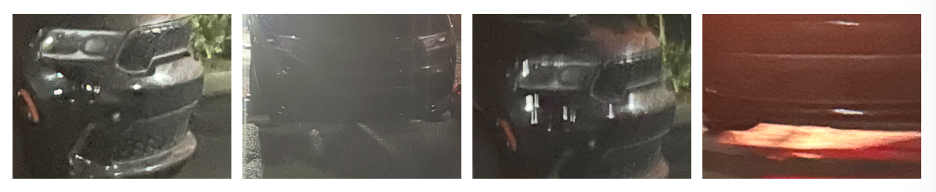
Photographs taken by Lindsay Isaacs as the troopers impounded her vehicle on October 5, 2025.
Trooper Jateff claimed she saw damage consistent with the crash, however, and impounded Lindsay’s vehicle. Mystified at the time of the early morning appearance of these officers, Lindsay says she cooperated, was honest, and was ignored.
“They really didn't care to look at my whereabouts. I gave them my receipts of where I was that night and they were just like, ‘Okay, great, we're going to impound your car and this is now a criminal investigation and you're under a criminal investigation as well.’"
She hired an attorney, Patrick J. McGeehan, the same day.
Seven Months
Following that challenging morning. Lindsay had to hurry up and wait. She had an attorney, she had the truth, but she was losing her faith.
“I wasn't really praying during that time, those seven months of the unknown…” Lindsay said, “I just was like, "Well, that didn't work.”
The so-called justice system, meanwhile, got to work. On October 14, a search warrant was executed by Trooper Jateff to collect a list of possible evidence.
Lindsay’s attorney notes in public documentation of the case, that Jateff failed to recover, or at least failed to document recovery of, Electronic Data Recorder (EDR) information from her car, which would have provided specific technical and safety related data just before, during and after a crash or sudden deceleration event. There is also no record of trace evidence from the exterior of the vehicle or “seizure of vehicle components associated with the alleged impact,” though the warrant would have allowed for both.
Lindsay doesn’t mince words: “They did not do any of their jobs to see it wasn't me.”
“There were so many lies and so many things that weren't looked into enough or maybe at all.” Lindsay continues, “And if they were, this would have never led to an arrest. I really want people to understand it was not Flock that did this to me. It was the troopers that did this to me.”
Human decency and an oath to the ideal of honor calls law enforcement officials to ensure force is deployed in a measured, responsible, and responsive manner to achieve justice. The Principle of Human Respect acknowledges the inevitable reality of what happens when anyone, including law enforcement officials, fall short.
Lindsay has experienced anguish, physical incarceration, and the weight of the media's megaphone because Florida officers swore under oath, despite evidence to the contrary, that her lightly scuffed Durango had struck another vehicle while going more than 100 miles per hour.
“There was so much evidence that I wasn't there and that my car wasn't involved.” Lindsay recalls, “They didn't care. You could be doing nothing wrong and still somehow get tied into a crime that you had quite literally nothing to do with.”
Despite the alleged lack of diligent investigation, officials continued to run with the narrative that Lindsay was a killer who fled a crime scene and put mounting pressure on her family. The stress and uncertainty took a toll. Lindsay’s daily prayer routine became a memory, and her religious study books gathered dust.
On April 17, 2026, Isaacs was arrested and jailed. If found guilty of the charges against her, she could face life in prison.
“In my mind at that time, I'm wondering why God is making this happen.”
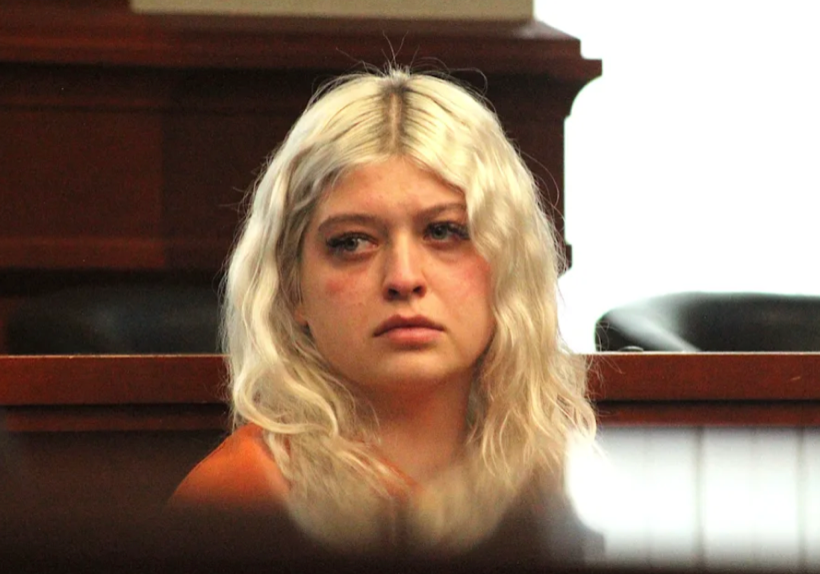
Compassion and Faith
Facing a life in prison, Lindsay set about getting right with her faith. For thirteen days, “It was just me and God in that jail cell,” and she found herself praying alone and with fellow inmates regularly.
“I realized in my mind that this was almost like God's way of taking everything and everyone, all my distractions, away from me. I think that this happened for a reason.”
Outside the Volusia County Branch Jail, more information was becoming public and citizens began to ask uncomfortable questions. Simply put, it was not believable that the vehicle now able to be viewed by the public had been involved in the deadly high speed crash.
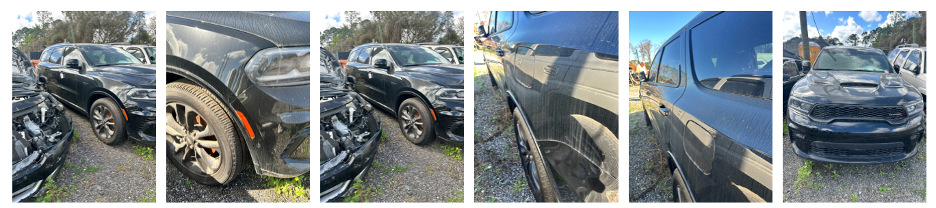
Photos of Lindsay’s car in the police impound.
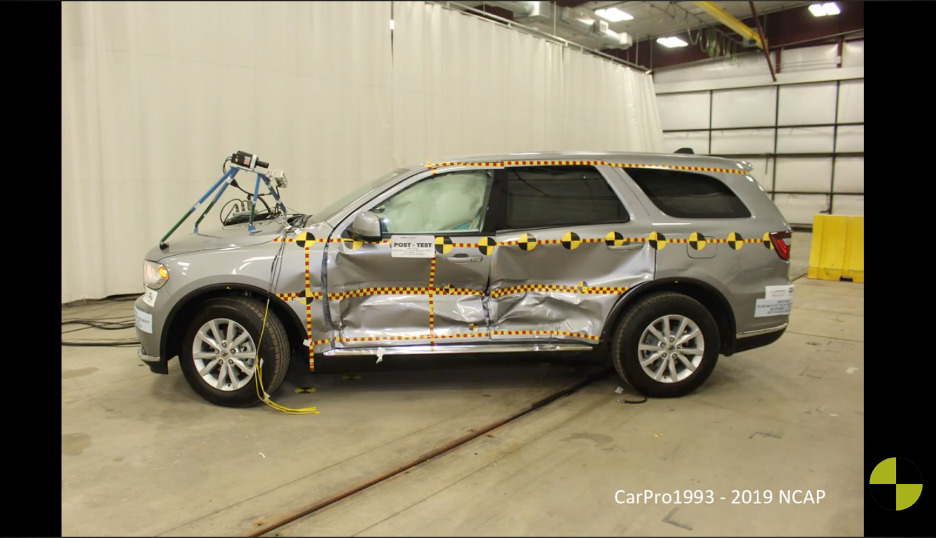
https://www.youtube.com/watch?v=PHF4NCYJNpQ NHTSA side crash test results at a 38.5 MPH impact.
On April 28, Assistant State Attorneys requested a meeting to discuss the case. Attorney McGeehan says their office was conducting a review and wanted to talk. Later that same day, bond was granted, and Lindsay was able to leave prison. A month later, on May 22, Florida state officials filed an “announcement of no information,” which in this case ironically held vital words that set Lindsay’s life back on track: every criminal charge was dismissed with state attorneys declining to prosecute the case.
Later that day, another individual, Alisa Montalvo, was arrested, and charged. Though she is innocent until proven guilty, evidence has been introduced showing that Montalvo had her Dodge Durango repaired three days after the crash and never reported the damage to her insurance company.
With her freedom restored and her life ahead of her, Lindsay Isaacs has goals.
She wants to write a book about her experience, identify and support others who have been wrongfully incarcerated, and pass a law to “require human verification before an arrest based on an ALPR” as a safety check on the rapidly growing technology.
“I now have the relationship that I always wanted with God and better than I could ever imagine. And I got to help other people” she said with a smile; then more seriously, “I nearly lost my entire life. I was thinking in jail, ‘I'm never going to be able to have a baby now. Now I can't get married. Now I can't meet the love of my life. Now I can't see my animals.’ I almost lost my whole entire life because of police negligence."