Florida guardianship racket bleeds $400k from elderly woman
By: Conner Drigotas
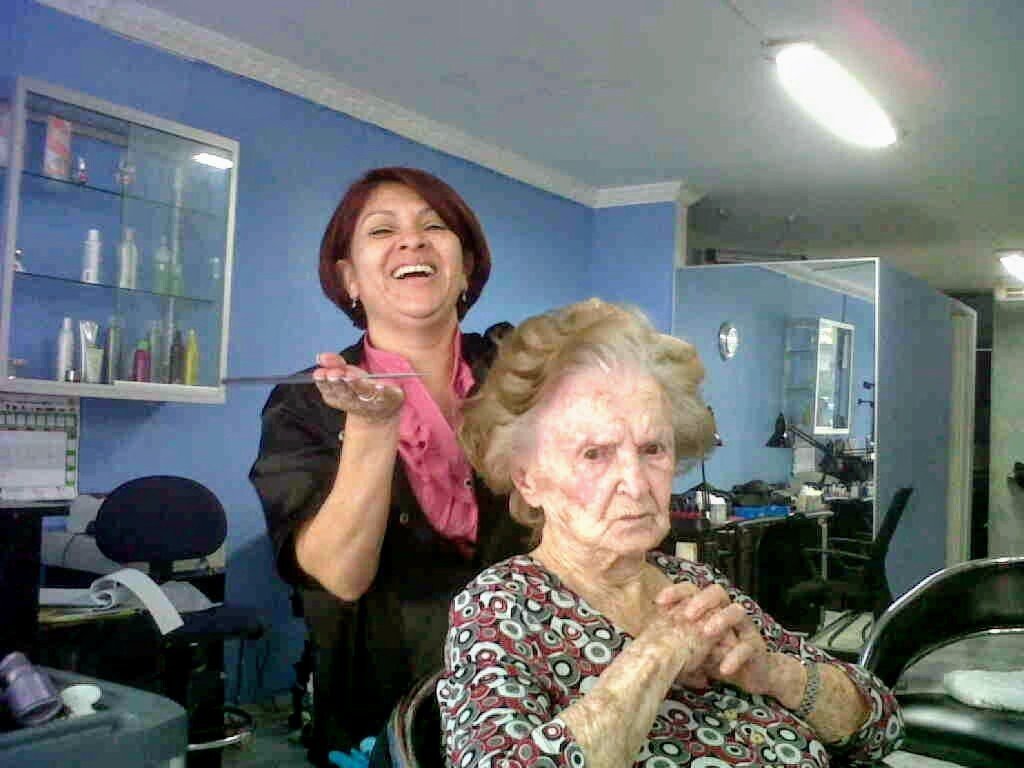
In early 2010, Lidya Abramovici was facing a family crisis. Her mother, who had long been taken care of by Lidya’s sister in Venezuela, was in her second month of an annual two month extended vacation visiting Lidya in Miami, when a letter from the sister’s husband arrived, explaining that they could no longer care for the aging woman.
Worse, Lidya says that her sister invited Florida state officials to initiate guardianship proceedings based on poor advice from her friends and legal counsel. If the state found Perla to be incompetent, it would mean the 95 year old would lose control over her money, health decisions, freedom to travel, and would be forcibly relocated to a state owned elder care home, despite being a Venezuelan citizen and having no other ties to the United States.
“They go to these facilities, they don't let anybody see them,” Lidya explained, when asked about the facilities in an interview.
It wasn’t just fear of losing access to her mother that was causing problems; as Florida state officials began to make inroads toward state guardianship, Lidya and her mother were exposed to a slipshod evaluation process, and concerns about what care would look like began to grow.
“So for her, was overwhelming. They come here, three doctors. The doctor don't speak Spanish. Imagine evaluating a patient when you don't speak the language.” Lidya explained, “So you ask questions, and somebody had to make a translation. It was not the right translation. And then, on top of everything, the guardian didn't speak Spanish either.”
The typical process in eldercare guardianship proceedings inserts a state appointed “guardian,” a single point person in charge of making sure bills are paid, healthcare needs are being met, and is otherwise tasked with advocating for their client.
State appointed guardians also have a darker reputation for colluding with judges, extracting clients money, and even physical or psychological abuse. There are thousands upon thousands of cases where state appointed guardians have been accused of bad behavior, but in the name of privacy, even the Government Accountability Office ostensibly holding oversight powers says they don’t even know the extent of such corruption.
Perla being unable to communicate with the person assigned to advocate for her seemed to be a recipe for bad outcomes so Lidya, seeking to instead take on the work of care for her mother directly, decided to fight back.
It did not go well.
“After the hearing, my attorney told me, just get out of here, because they are going to take your mother and they won't let you see her ever again.” Lidya says, “So the next day [August 2010], we took an airplane and we went to Panama.”
Picked Apart in Panama
“I didn't know anybody. My mother at that time was 95.” Lidya told Respect America in an interview, “The only thing I knew in Panama was the language. So we came to Panama, just from the night to the day, and with one suitcase. And we stay there for 18 months.”
Despite the insistence by judges and Florida government attorneys that Perla needed to be institutionalized in Florida, Perla went on living her best life in Panama.
“My mother was very active.” Lidya says, “Every day, she will go out for coffee, for a snack in the afternoon. I took her to visit the Panama Canal. She would always like going to the shopping centers.” In a 2015 email to a reporter, she called her mother “very lucid and strong” when she was being evaluated for guardianship.
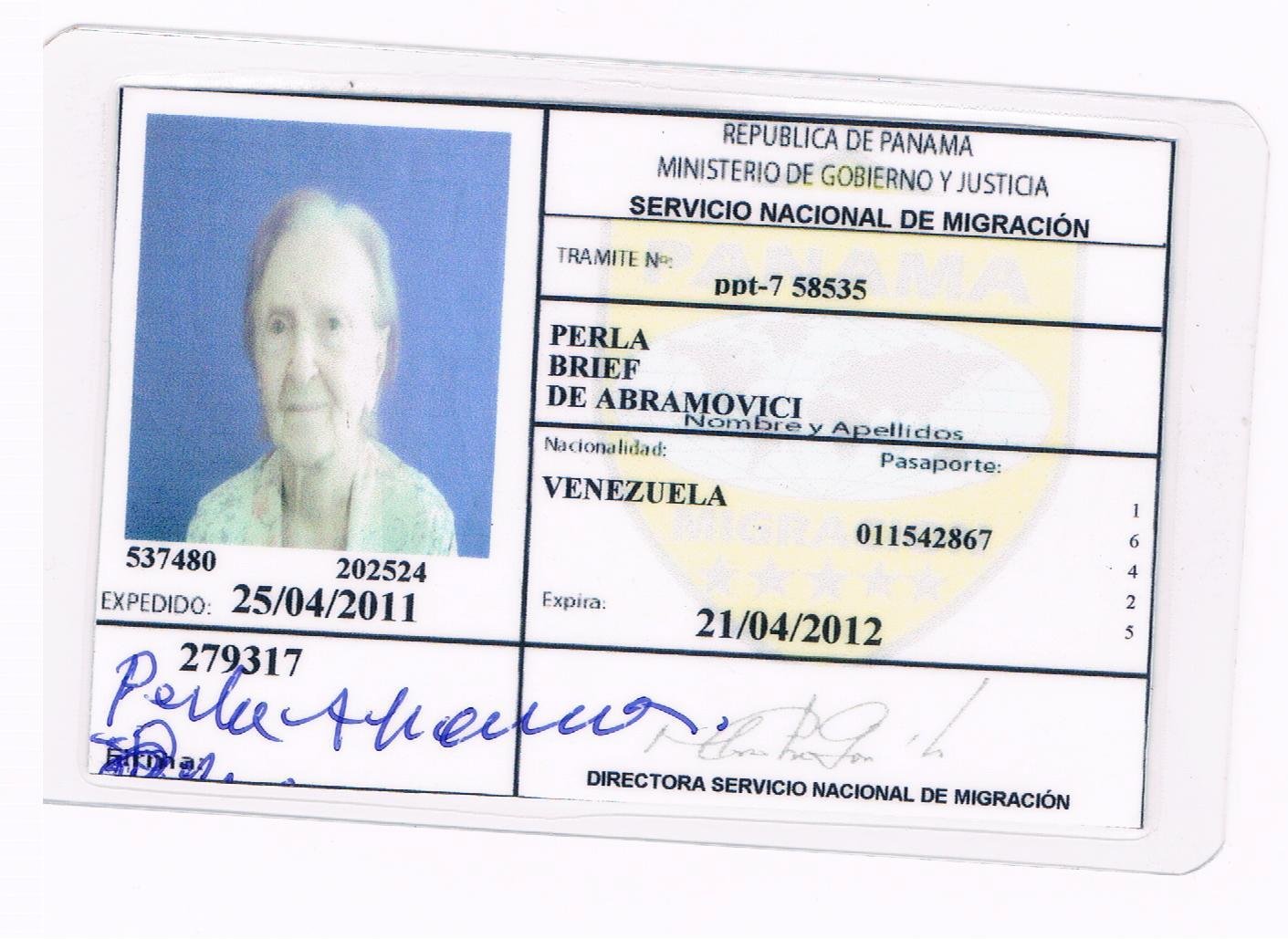
Perla’s resident status card while living in Panama
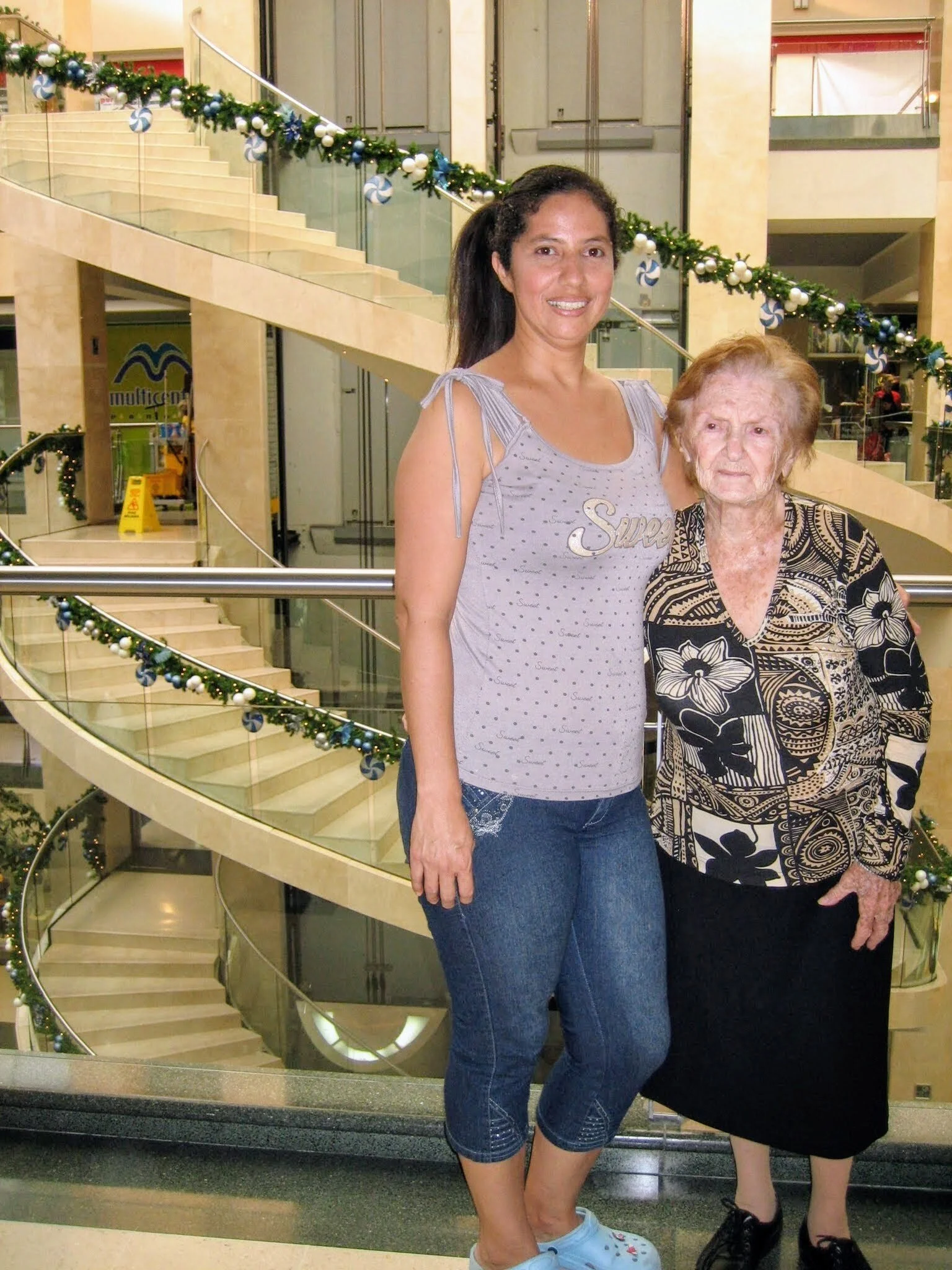
Perla while living in Panama
In other words, the evidence that forced guardianship wasn’t needed could be found simply by observing Perla’s ability to enjoy daily life with only voluntary help.
“Everybody knew that she didn't need the guardianship.” Lidya says, “This was only guardianship for the money, and that was until the end.”
Though Perla was not under state care, that didn’t mean she was off the hook for ongoing costs related to her guardianship case. Lidya claims there was the cost of the lawyer to fight back against Florida state officials, and also the financial charges that were being levied against her dwindling accounts to finance the limited guardianship of her money and health that the state decided to operate along the way.
“Through the attorneys the judge was having always regular meetings and hearings, because the attorneys, every time they have a hearing, they charge money.”
Lidya also alleges that Perla’s accounts were charged for international travel of government officials seeking to institutionalize her.
“They were here harassing us to bring her back. They even sent to Panama a detective to go after me. He came to the house to check the house, to check everything, and who was paying for that? My mother's money.”
Lidya alleges that judges and attorneys in the probate system work together to extract money from the elderly, and there are hundreds of examples across the country of this happening. More specific to this case, there were a lot of judges and attorneys who were being paid.
In a November 2011 hearing, there were nine attorneys appearing before Judge Maria Kovrick.
How many of them had spent even a few hours with Perla, knew her favorite movie, or had shared a meal with her? Who in the room was justly empowered to decide her happiness, or deny her the right to say no?
None of them ever spoke to her like a person.
Ultimately, Lidya said, it was just another coercive transaction.
“They go and start taking. Each one of them start taking the money, and until there is no more money, and then the guardianship is finished,” Lidya explained.
In June 2011, Perla and Lidya received a court order signed by Judge Maria Korvik, directing them to return to the United States for an in person hearing in accordance with the wishes of opposing counsel. Fearing other retribution or the complete seizure of Perla’s assets, they made the trip back to Florida to face the state.
“My mother will say, I cannot [go] back to Miami because they will take me away and I don't want to go to a living facility.”
Perla was never institutionalized, but she was barred from leaving the United States, even after Lidya’s sister reportedly offered to take her back, and efforts to force her into state care continued until her death.

Lidya, in a 2015 email exchange with a Miami Herald Reporter
“Horrible, horrible, horrible.”
Perla passed away on February 17, 2013, ten days after her 98th birthday, and just four months after returning from Panama. Those last months of her life were spent suffering at the hands of Florida state officials who continued their efforts to have Perla put under forced guardianship, in a country she had no official ties to.
“Being back in Miami? Horrible, horrible, horrible.” Lidya says, “How so? Because when they were with the attorneys, the doctors came again. Nobody understood. Being surrounded by strangers was not going to help her health in any way. This was all because of money.”
Lidya said that by this point the process had drained Perla’s estate of more than $400,000. In the November 2011 hearing transcript, Judge Korvick identifies this as a problem as well, pointing out there were so many attorneys they “barely” fit in the office they were meeting in and saying: “everybody is paying attorneys' fees, and by now, I'm sure they're a pretty penny,”
Lidya’s later request for an audit to uncover corruption would be denied on the grounds that state law makes those financial records confidential. She has no way to audit whether attorneys intentionally dragged out the processes to increase billing, but is aware of how high-conflict cases have been known to drain resources.
“They strip away every single [dollar]. There is nothing left on you at all, because they take out everything that is possible, from your entire estate. If it's [necessary, once they spend all of the money in your account], they take away your property to sell it. [But] my mother did not have any real estate property in the USA” and they did not spend all of her money through this process.
Despite their challenges during those months, Lidya says that she was grateful for the time she had with her mother, and is glad she was never put in a home.
“I was able to keep my mother till the end. She would have been so devastated [to be put in a home.]”
Since her mother’s death, Lidya has been working to bring about systemic change but has not been able to find allies among government officials. Instead, she has tried writing to Florida grand juries several times per year, asking them to help uncover financial abuse by state officials. In Florida, a grand jury has the power to inquire into any indictable offense and can investigate criminal offenses or official misconduct. They can also issue subpoenas and hear testimony and issue indictments.
Lidya has realized that asking the government to do better is not going to change anything, so instead she has been connecting with authors and media to help tell Perla’s story again and again.
“I cannot die until I see a result on this. Just in November, I [turned] 76 years old. God only knows how many years I am here to fight.” Lidya says, “I cannot stop, because I cannot take the injustice. I cannot take the corruption that there is here. These are the part of the society where are the most abused and innocent people”
Cases of elder abuse continue to make headlines in Florida, with recent stories including physical abuse, robbery and battery, neglect, denial of food and water, and fraud.
In 2021, the Netflix film I Care A Lot was constructed from real life events and raised popular awareness of guardianship schemes impacting 1.5 million adults, and their estimated $273 billion, under the control of guardians in the United States.
Ultimately, Lidya believes it is only the power of awareness that will bring about positive change.
“There is corruption. We need to stop the corruption. The public has to know what is happening so we can get somewhere.”